Best time to plant fruit trees in Napa County? It depends
Master Gardeners are often asked about the best time to plant a fruit tree. And I think we usually all give the same answer: It depends.
I know that’s not a satisfying reply. It can feel vague, even evasive. But without knowing all the details, “it depends” might be the most honest response we can give.
We could say that the best time to plant a tree is when conditions favor root establishment over stress. Or we could say “fall is for planting,” and in a lot of cases that’s true.
In Napa Valley’s Mediterranean climate, autumn has clear advantages. The soil is still warm from summer. The air begins to cool. Evaporation slows. Trees lose less moisture through their leaves. Meanwhile, roots continue growing underground even when top growth slows. That imbalance can give a new tree time to settle in before it begins to leaf out in spring.
For many deciduous fruit trees, I often recommend winter planting during dormancy. Bare-root trees installed in late winter, before bud break, experience minimal transplant shock. The tree is essentially asleep. It wakes up in spring already in its new home.
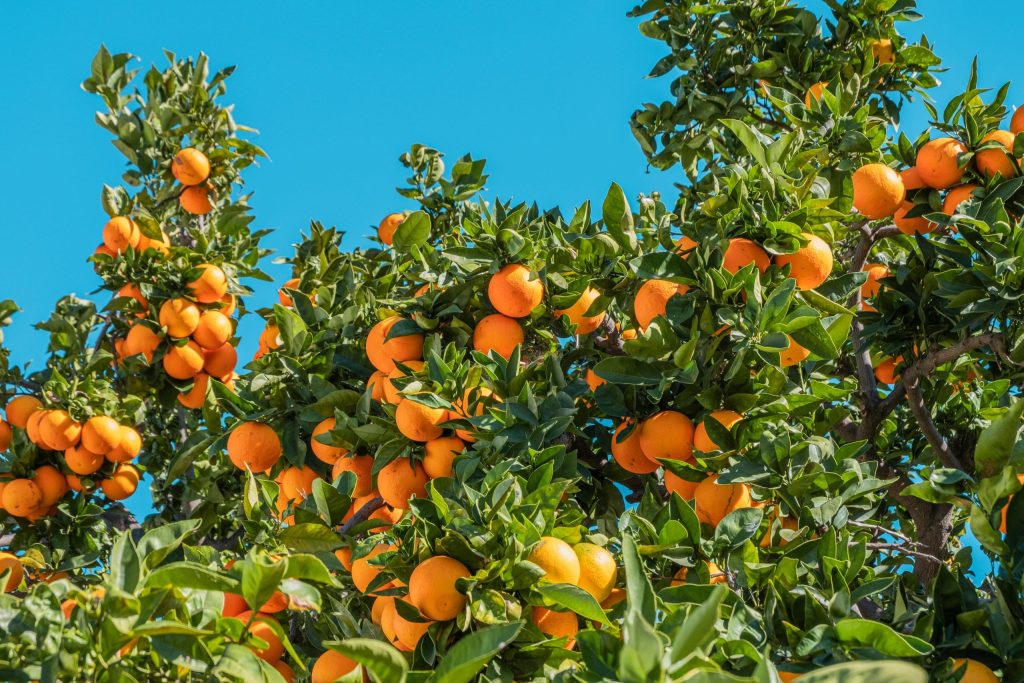
But are you planting citrus, avocado or something equally frost sensitive? In Napa County, I’ve seen frost pockets surprise people year after year. Cold air settles in low spots. Hillsides behave differently than the valley floor. A citrus tree planted in October might start off beautifully only to suffer damage during a hard December freeze. In that case, I may recommend planting these trees in late winter or early spring, once frost risk has passed.
I also think about soil. Is it well-draining loam? Or more likely, heavy clay? A tree planted in poorly draining clay right before winter rain risks having saturated soil for weeks. Roots need oxygen as much as water. Depending on your soil type, you might want to shift the planting time to avoid waterlogging.
Your irrigation method also affects decisions about planting time. Is your system reliable? Are you planting an orchard or a single specimen tree in a landscape? Are you trying to maximize first-year growth or simply ensure survival through heat and cold?
Over the years, I’ve walked through enough gardens to see patterns. I haven’t just read about overwatering: I’ve seen what it looks like in every season. I don’t just study low-light stress: I’ve watched sun-loving trees stretch and struggle in shaded courtyards. I’ve seen trees planted in July thrive because irrigation was dialed in and the site was appropriate. I’ve seen fall plantings fail because drainage wasn’t addressed. There is no universal date on the calendar that guarantees success.
So when someone asks me, “When should I plant my fruit tree?” I usually respond with more questions.
Most people want simple formulas. But living systems don’t operate on schedules. They respond to conditions. They respond to context.
Even within Napa County, I see dramatic differences from one property to another. A yard in downtown Napa can behave very differently than a property on Third Avenue. Wind exposure, soil depth, irrigation source, surrounding canopy—all these factors influence when planting makes the most sense.
When I say, “It depends,” I’m acknowledging the complexity of fruit trees and that there might not be a perfect answer. So much of what I’ve learned hasn’t come from ideal outcomes but from mistakes. Trees planted too deeply taught me about crown rot. Trees stressed by heat taught me about irrigation timing. Trees damaged by frost taught me to pay attention to microclimates.
Every failed planting, if you take the time to analyze it, becomes a lesson. Over time, you build pattern recognition. I can now stand in a yard and often anticipate how a tree will respond months from now because I’ve seen similar scenarios play out before. That accumulated experience is what informs my “it depends” answer.
Typically, for a deciduous fruit tree, planting in late fall through winter dormancy is best. If you’re planting citrus or another cold-sensitive species, I usually recommend waiting until frost risk has passed. In any case, make sure your soil drains well. Avoid planting during extreme heat waves. Water consistently while the tree is getting established.
But, most importantly, observe your site. Walk your property after a rainstorm. Notice where water pools. Pay attention to where frost settles on winter mornings. Watch how the sun moves across your yard in July and again in January. These observations will guide you more effectively than any fixed planting date.
Planting a tree is an act of optimism. It’s a long-term investment. Giving that tree the right start means respecting the complexity of the natural environment. So, when you ask me when to plant your tree, I’ll probably still say, “It depends.” And I’ll mean it in the most thoughtful way possible.
Library Talk: Join UC Master Gardeners of Napa County and Napa County Library for a free talk on “Healthy Soil = Healthy Plants” on Thursday, March 5, from 7 to 8 p.m. via Zoom. Are your plant problems due to the health of your soil? Learn about potential problems and possible solutions for improving your soil. Register here to get the Zoom link.
Workshop: Join UC Master Gardeners of Napa County for a workshop on “Spring and Summer Vegetables” on Saturday, March 14, from 10 a.m. to noon, at UC Cooperative Extension, 1710 Soscol Ave., Napa. Come get your hands dirty in this hands-on vegetable growing workshop. Learn what to plant now and later when the weather gets hot. Soil prep, irrigation, seed-starting, transplants and potential problems: we’ll cover it all. Register here.
Help Desk: The Master Gardener Help Desk is available to answer your garden questions. Use our online Plant Problem Help Form or email us at [email protected]. Include your name, address, phone number and a brief description of the problem. You can also visit us in person on Mondays and Fridays from 10 a.m. until 1 p.m. at the UC Cooperative Extension Office, 1710 Soscol Ave., Suite 4, Napa.