Increase in power outages raises concerns at Yountville Veterans Home
Seven power outages have hit the Yountville Veterans Home in the past three months, leaving the mostly elderly population in the dark for hours at a time.
The most recent outage, which occurred the morning of Oct. 9, lasted more than two hours. Its cause remains unknown, according to Pacific Gas and Electric Co. representative Megan McFarland.
“We are old and this disrupts our lives,” Jamie Neely, a veteran and chairperson of the home’s Allied Council, said. “This is not adequate. It’s not good for us, and it’s not safe for us.”
Neely was one of multiple home residents who brought the outages to the attention of the Napa Valley News Group. The high frequency of blackouts has been “problematic,” for residents of the home, where the average age is 80 years old. With four confirmed outages in the past month alone, it appears they are becoming more frequent.
Since August, the unplanned outages have totaled more than 14 hours at the campus, which is home to roughly 540 residents. PG&E representatives confirmed six outages, and California’s Department of Veterans Affairs reported an additional unplanned PG&E-based outage on Sept. 1, although a PG&E representative said an unreported Veterans Home outage on its end likely points to the home’s equipment failure.
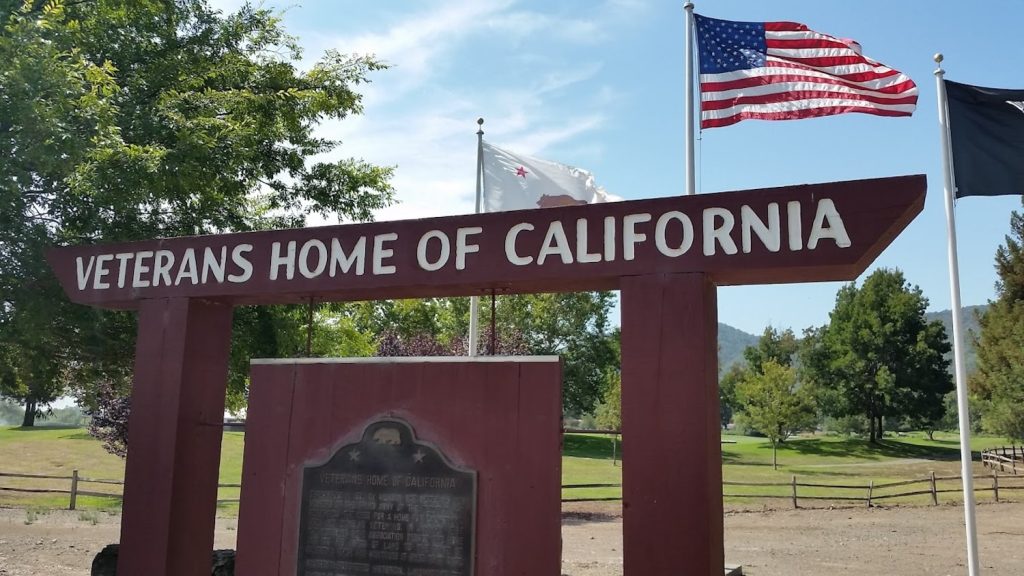
Established in 1884, the Yountville Veterans Home is the largest in the country and one of eight in the state. It spans 615 acres, offering independent living, assisted living, skilled nursing care and memory care to veterans and spouses. Due to years of budget cuts, residents and CalVet officials have been raising the alarm about worsening infrastructure and deferred maintenance at the historic home.
CalVet spokesperson Josh Kiser said that each time an outage occurs, the home’s management follows procedures to ensure the safety and comfort of residents and staff. These vary based on the time of the outage and its anticipated duration, he said.
“Residents are notified, and welfare checks are administered by staff,” Kiser wrote in an email. “During extended outages, the home’s main dining room has generator power and is utilized as a place for residents to socialize, access the internet, and charge electronics and mobility devices.”
With its combination of dry vegetation and hot summers, Yountville is considered a “high fire threat district,” according to PG&E. Before the start of fire season this spring, PG&E activated a safety system along local power lines called Enhanced Powerline Safety Settings (EPSS), as they do every year, McFarland wrote in an email.
The hyper-sensitive setting means that if a line is compromised by a fallen branch or animal activity, power will be automatically cut so that the downed line won’t spark the next blaze.
Outage footprints aren’t isolated to residents at the home; the line that powers the home impacts some 950 customers in the area. But Yountville’s veterans might feel it the most. A majority of the residents require some kind of support, from basic assisted living to around-the-clock medical care.
“It’s a military pain in the ass,” resident Jeff Williams said of the outages. “We have our camping lights. You basically camp for a while.”
The building Williams and his wife live in, Section G, is equipped with a backup generator, which, he said, powers essential areas in the residence hall. The Veterans Home has stationary backup generators in its three licensed care buildings, its main dining room and Section G. During outages, residents in independent living are offered use of portable generators that allow them to charge mobility devices and electronics.
Neely, who lives in Section E and has sleep apnea, said that, following outages at the Veterans Home last year, she purchased her own backup lithium battery, which allows her to run her CPAP machine overnight and also can charge her laptop and cell phone.
“I make sure anytime I get in an elevator I have my cell phone,” Neely said. “It’s a major problem, and for us, at the ages we’re at, it’s more so.”
Usually, during outages, she said the veterans can go to the dining hall where a generator kicks into gear. But during an outage last month, Neely said it never turned on. “This whole place was down, every last bit of it,” she said.
In at least one instance, residents reported air conditioning across the entire campus was cut off. Kiserconfirmed that during the Sept. 28 outage, the campus’ air conditioning shut down for about 12 hours. Since then, he said, a secondary system was activated to provide air conditioning to the facility while the main chiller awaits repairs.
In 2022, Gov. Gavin Newsom earmarked more than $5 million for multiple infrastructure upgrades to ease tens of millions of dollars “in unbudgeted deferred maintenance” on the home. According to Cal Vet’s most recent report, the upgrades include transfer switches and updated electrical panels in seven residential and care buildings, allowing for access to temporary emergency generator connections.
The same report notes that “the Yountville Home routinely relies on emergency contracts to address sudden facility and equipment failures… despite the best efforts of staff at the Home, these issues worsen with each year as facilities and systems continue to age.”
Three years since the $5 million boost, it looks like residents will have to keep waiting. According to Kiser, the electrical upgrades are currently in the design phase. The upgrades, he said, will only address extended outages that last multiple days, “rather than the types of outages the Home has experienced recently,” which have lasted anywhere from minutes to nearly four hours.
According to PG&E, upgrades are incoming for the wider Yountville area to improve reliability on the lines and reduce outages. The changes should allow the utility agency to better pinpoint the cause of outages, which should mean shorter blackouts in the future.
PG&E is hosting an open house on Oct. 29 at the Yountville Community Center from 5 to 7 p.m. to discuss reliability, community challenges and improvements.
Sponsored
Authors