Napa County Master Gardeners: Majestic trees may not be well
The tree is 50 feet tall with a 30-foot-wide crown, a majestic and statuesque presence in my garden. I just love it.
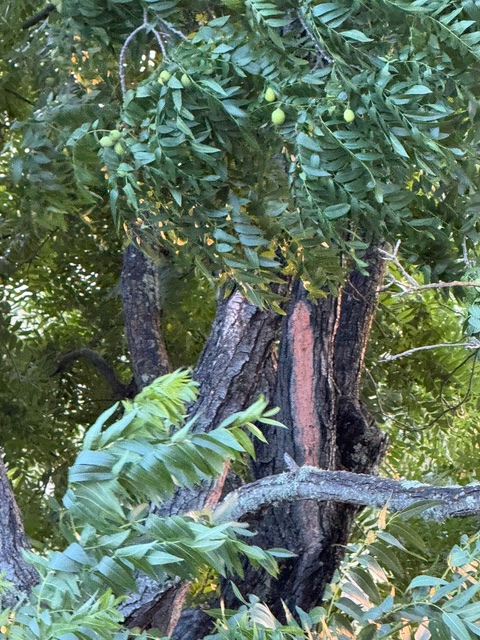
And it is fatally ill. Truly, fatally. As a Master Gardener, that is the last thing I wanted to learn when I spotted bright orange blotches on the trunk in January when all the leaves were gone. I will have to remove it someday. I am already imagining the empty space it will leave. Phytophthora is a terminal diagnosis in a tree of this size.
My tree is a black walnut, about 45 years old. It has provided shade in the garden, limbs for swings and branches for children to climb. It has produced walnuts for squirrels and for homemade nocino, the Italian walnut liqueur.
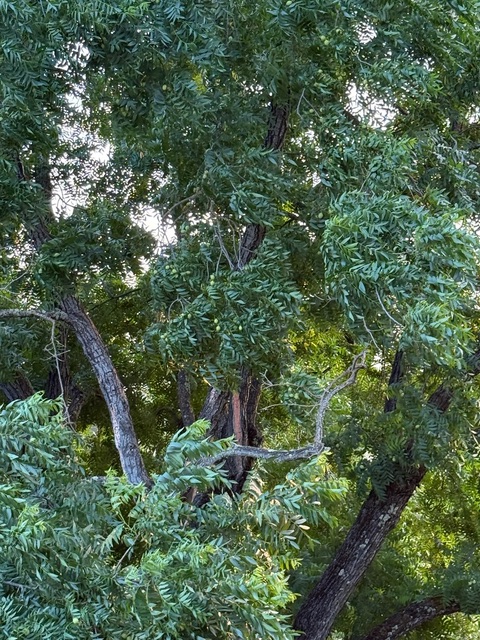
Black walnut (Juglans nigra) is a hardwood tree native to the east and central U.S. More likely, the black walnut in my garden is Juglans hindsii, also known as Northern California walnut, Hind’s black walnut or Claro walnut. It is endemic to Northern California, ranging from the San Joaquin Valley to the California coastal ranges.
You can recognize the Northern California walnut by its short, thick black trunk and lack of branches in the lower 10 to 40 feet. Its immense crown can span 60 feet, making it a fantastic shade tree in summer. Its leaves are one foot in length with 13 to 21 leaflets. The tree is resistant to frost and does not leaf out until late spring when the soil is warm. This description fits my black walnut precisely.
Black walnut is allelopathic, meaning it emits compounds that affect the plants around it. In the case of black walnut, it produces juglone in its roots and leaves. This toxin can harm other organisms, giving the tree a competitive advantage. In fact, nothing grows underneath my tree.
Due to its nematode resistance and drought tolerance, Juglans hindsii is a commercially important rootstock for the English walnut. The tree has certainly thrived in its western placement in my garden, its canopy providing welcome shade all summer. But enough about black walnut. Let’s talk about the diagnosis: Phytophthora.
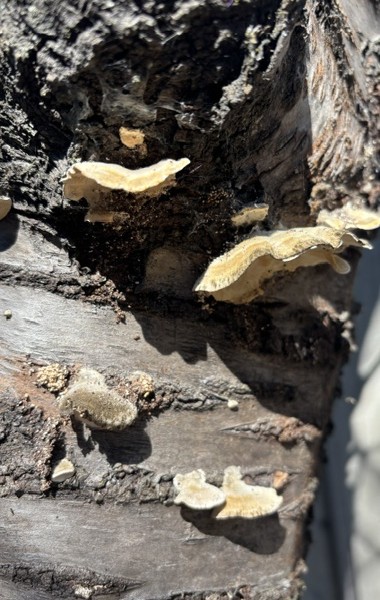
Last January, bright orange patches on the trunk of my tree caught my eye. At first, I thought they might be a kind of orange fungus that colonizes dead trees. But my tree is alive.
I pulled my California Master Gardener Handbook off my shelf and looked up diseases of walnut trees. Through examination of symptoms and signs, I began the process of elimination, using a list of walnut diseases on the University of California IPM site. The one disease I could not eliminate was Phytophthora, primarily because of the orange streaks and the lack of vigor of the branches near them. Photos from UC IPM confirmed the orange markings as a sign of the disease.
Phytophthora root and crown rot is a fungal disease that infects many types of plants, including black walnut trees. The condition can affect the roots, or the crown, or both. The disease thrives in wet, poorly drained soil and can cause the roots of the tree to rot, leading to a decline in overall health and eventual death. Symptoms in black walnut trees include yellowing leaves, wilting foliage, stunted growth and cankers at the base or on the trunk.
Although my tree does not have cankers or exhibit signs of root rot (yet), and it never has been in saturated soil, there is marked defoliation near the orange spots. I consulted a certified arborist, who has sadly confirmed my diagnosis.
Phytophthora is somewhat treatable in much younger and smaller trees, and walnut trees in commercial orchards can benefit from certain fungicides when Phytophthora is present. My old tree is too large to consider treatment of any kind.
The tree will decline over the next few years. My dilemma is whether to watch it slowly perish or remove it now and plant another tree, or more likely three trees, in its place. The likelihood of my living long enough to see a replacement tree reach that size is pretty low.
Fortunately for others considering tree replacement, PG&E publishes a brochure on planting the right tree in the right place. It lists and illustrates a wide variety of trees suitable for gardens large and small. Primarily designed to help homeowners select trees that will be planted near powerlines, the document nonetheless suggests tantalizing specimens. I’m going to look for quick-growing ones for when the time comes. What would you do?
Workshop: Join UC Master Gardeners of Napa County for a workshop on “Welcoming Pollinators into Your Garden” on Saturday, Aug. 23, from 10 a.m. to noon, at UC Cooperative Extension, 1710 Soscol Ave,, Napa. Monarchs and other pollinators are in serious decline. Learn what you can do to help by creating habitat to support these essential creatures. Registration required.
Library Talk: Join UC Master Gardeners of Napa County for a talk on “Compost: It’s Alive!” on Thursday, Sept. 4, from 7 to 8 p.m. via Zoom. Learn how decay breeds life in your garden and how you can harness the power of compost. Register to receive the Zoom link. Note that the meeting will lock and allow no further entry at 7:15 p.m. Please join prior to 7 p.m.
Tree Walk: Join UC Master Gardeners of Napa County for a docent-led tree walk of Fuller Park in Napa on Friday, Sept. 12, from 10 to 11:30 a.m. Historic Fuller Park is an arboretum with many exotic and native trees planted over the past 120 years. Meet at the corner of Oak and Jefferson Streets in Napa. Registration is required for each participant.
Become a Master Gardener Volunteer: UC Master Gardeners of Napa County is now accepting applications for the Class of 2026. Visit napamg.ucanr.edu for more information and register to attend a mandatory information session for applicants. Applications are due by 5 p.m. on Sept. 25.
Help Desk: The Master Gardener Help Desk is available to answer your garden questions on Mondays and Fridays from 10 am until 1 pm at the UC Cooperative Extension Office, 1710 Soscol Ave., Suite 4, Napa. Or send your questions to [email protected]. Include your name, address, phone number and a brief description of the problem.