Napa County Master Gardeners: The residents in my garden
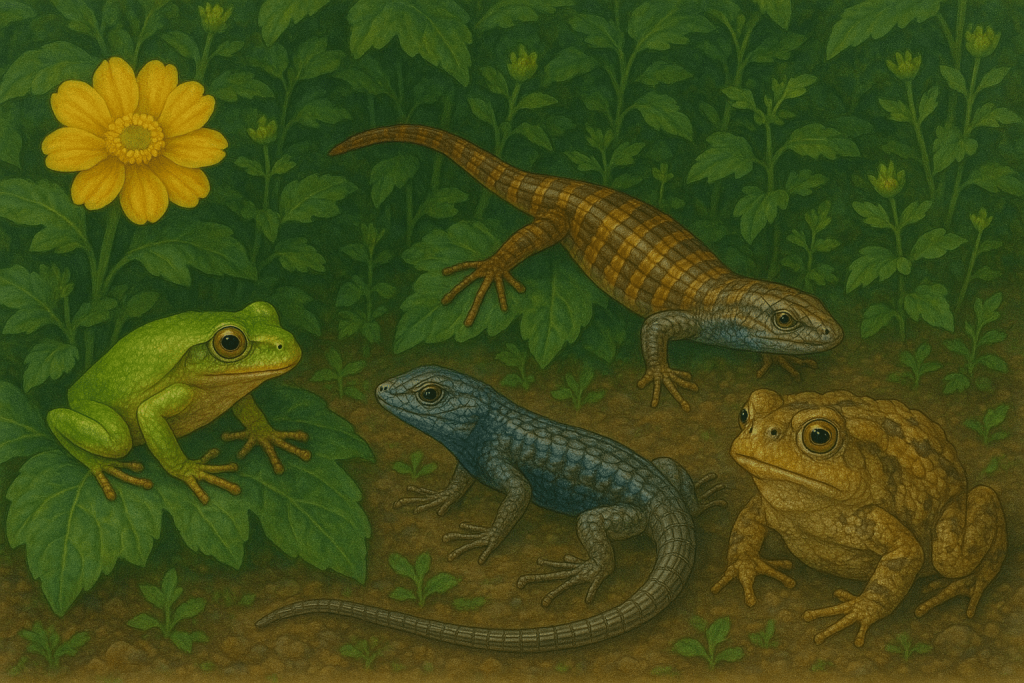
I live near the end of a country lane. I have lots of little creatures that live in my garden and seem to thrive. Among them are tiny toads, baby tree frogs, lots of blue-belly lizards, an occasional alligator lizard who likes my garage and, now and then, a snake of one type or another.
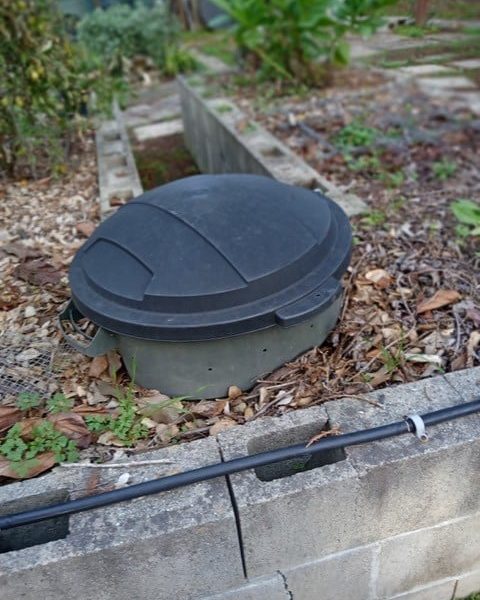
I like these residents of my garden. I talk to them when I am out and about, and they come check me out. The toads and frogs seem to like living in my worm bins. I hope they are there to eat fruit flies and not my worms.
Sometimes they want to leave the bins but have trouble getting out so I help them. Some are willing to get in my hand and others say, “No way.” One special toad sat on my hand as I moved items around in the bin. I fear he is gone as I have not seen him this year.
The lizards had an abundance of babies this year. They are tame with me but not my dog, the great lizard hunter. She has never caught one but they fascinate her, and she knows their hiding places.
I have a shed with a crack under the door just big enough for lizards to go back and forth. The blue-bellies seem to love this shed. They are warmer inside in the winter, but on sunny days they come out to lay on the driveway and soak up sunshine.
All the lizards are named Lizzy and some let me get quite close as I talk to them. One time a lizard, frightened by my dog, jumped on my pants leg and stayed there for quite some time. Blue-bellies are also called western fence lizards but I have never seen one on a fence.
Another time, when we were eating on the patio, a nearby pair got very passionate. We sat quietly and watched this X-rated lizard show.
Alligator lizards are much bigger than blue-bellies, but I rarely see more than one each summer. He seems to patrol my entire garden and on occasion goes into the garage. The last time he went in he did not want to leave.
I have seen fewer racer snakes over the years, although I have found them in my worm bins, likely feeding on the frogs and toads. I ask them nicely to leave, but occasionally I have to get physical. Once a snake was moving around the bin with a frog hanging out of his mouth. I grabbed him behind the head and he let the frog go. Unhappy snake but very happy frog.
It is easy to identify racer snakes. I look at the shape of the head, then the body. They come in a variety of colors but are easy to distinguish from rattlesnakes. I also welcome king snakes and gopher snakes but I do not see them as often as the racers, also known as whip snakes.
So why do I welcome these critters in my garden? Because they eat a lot of pests. I quit spraying chemicals a few years ago because I did not want to hurt my little garden pals. Their average life span varies, depending on whether they live in the wild or in a controlled environment. In the wild, toads and lizards can live up to three years, while as a pet they have been known to live up to ten years.
One old blue-belly would hang around while I was at my garden workbench. One day I found him drowning in a bucket of water and tried to revive him. I laid him with his head down and worked on his little chest. Unfortunately, it was too late to save him.
I am seeing fewer and fewer snakes in the area. I hope it is not because people are killing them. They eat small rodents. The gopher snake is terrific at keeping gophers out of my garden beds. I could use one right now as the moles and gophers are very busy.
Many a bullfrog has made himself at home in my fishpond. One year I removed 13. I would return them to the Napa River, which is just across the road. I discovered that if I put it on its back, it would lay quietly in my hand while I carried it back to the river. I bet Mark Twain never told that bullfrog story!
I hope the next time you spot one of these creatures in your yard, you’ll remember they aren’t pests but garden helpers.
Library Talk: Join UC Master Gardeners of Napa County for a talk on “Compost: It’s Alive!” on Thursday, Sept. 4, from 7 to 8 p.m. via Zoom. Learn how decay breeds life in your garden and how you can harness the power of compost. Register to receive the Zoom link. Note that the meeting will lock and allow no further entry at 7:15 p.m. Please join prior to 7 p.m.
Tree Walk: Join UC Master Gardeners of Napa County for a docent-led tree walk of Fuller Park in Napa on Friday, Sept. 12, from 10 to 11:30 a.m. Historic Fuller Park is an arboretum with many exotic and native trees planted over the past 120 years. Meet at the corner of Oak and Jefferson Streets in Napa. Registration is required for each participant.
Fall Faire: Join UC Master Gardeners of Napa County for the annual Fall Faire,“Where science fair meets carnival,” on Saturday, Sept. 20, from 1 to 4 p.m., at the UC Cooperative Extension, 1710 Soscol Ave., Napa. Enjoy kid-friendly demonstrations and talks range from dehydrating produce to designing a pollinator-friendly garden, along with plenty of gardening advice. A plant sale will feature ornamental plants and seven varieties of winter vegetables, with all proceeds supporting Master Gardener programs. Event entry is free.
Become a Master Gardener Volunteer: UC Master Gardeners of Napa County is now accepting applications for the Class of 2026. Visit napamg.ucanr.edu for more information and register to attend a mandatory information session for applicants. Applications are due by 5 p.m. on Sept. 25.
Help Desk: The Master Gardener Help Desk is available to answer your garden questions on Mondays and Fridays from 10 a.m. until 1 p.m. at the UCooperative Extension Office, 1710 Soscol Ave., Suite 4, Napa. Or send your questions to [email protected]. Include your name, address, phone number and a brief description of the problem.