Napa County Master Gardeners: Where milkweed grows, monarchs follow
I had some tedious orthopedic issues this year, and my garden did not get much care. I recently looked at my garden calendar, where I keep records of successes, failures and plans.
My plans went sideways. But I am a fan of enjoying gardens at all stages of growth and decay, and anything is more fun with a toddler grandson. He helped me water the garden and feed the birds, and he enjoyed watching the bees and butterflies. And we had a lot of butterflies.
I always have plenty of gulf fritillary butterflies because I have loads of passionflower vines at my house. But this summer the monarch butterflies appeared in more abundance than usual.
Last year I obtained a dozen California milkweed (Asclepias californica) plants and plunked them in my back yard, in front of a Mexican marigold and some Hot Lips salvias. If they had been seeds, I would have moistened the raked soil, scattered the seeds and raked them in the soil. Then I would have covered them with a layer of compost and mulch. They don’t need fertilizer, and since they are food for butterflies, you should never use pesticides near them.
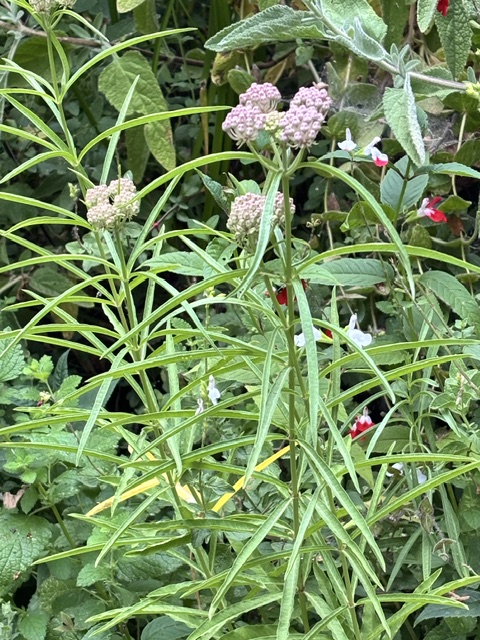
Seeds usually take two years to produce flowering plants. A milkweed seedling can bloom in one to two years. The plant itself has wispy, long, pointed, dark green leaves. It’s easy to pull them out accidentally when you are weeding, because they are so inconspicuous (I put a marker where I planted them). They grow to about three feet tall.
This summer I was rewarded with pinkish lilac flowers. A few months later, the flowers had turned into long bean-shaped pods, which split open vertically in early fall to reveal brown, teardrop-shaped seeds attached to a silky floss. This floss acts like a parachute and takes the seeds far and wide. I collected the seeds from several pods and let the rest go where they wanted.
Monarch caterpillars eat only the leaves of native milkweed. When they turn into butterflies, they like the nectar from other flowers. I have some large ceanothus, and an enormous Mexican sunflower. These plants thrived on neglect. They grew quite tall and produced plenty of flowers and I noticed a lot of monarchs around them.
Allium, monkeyflower and goldenrod are also excellent companion plants for milkweed because they produce so much sap for the monarchs. Other pollinators like those plants, too.
If you want to lure monarchs, make sure your plants have a staggered bloom time, so there is always nectar available. A steady source of moisture is also essential to your pollinator garden. Damp sand or just a dish with water and a large rock so the butterfly can perch is all you need.
The World Wildlife Fund had some good news: the eastern monarch butterfly population rose 64% last year. While this development is positive, the population is still much reduced from past numbers. Monarchs are at risk because of habitat loss for breeding, migrating and overwintering. Climate change and extreme weather take a toll, as does indiscriminate use of pesticides.
Western monarch butterfly numbers remain low, according to the Xerces Society. There is still work to be done. Native milkweed can be planted in urban areas, and overwintering sites can be protected, even amid new development. It just requires community education and will.
Now is the time to plant your native milkweed seeds. If you want to learn more about monarch butterflies, I recommend the Xerces Society website, www.xerces.org. It has information about monarch butterfly food sources and habitat. The California Native Plant Society also has recommendations for monarch-friendly plants.
Library Talk: Join UC Master Gardeners of Napa County and Napa Public Library for a free talk on “Tips, Tricks, and Tools: Advice from UC Master Gardeners” on Thursday, Nov. 5, from 7 to 8 p.m. via Zoom. Looking to improve your gardening game? Get some helpful growing tips, hard-learned garden wisdom and fresh ideas. Register to receive the Zoom link.
Help Desk: The Master Gardener Help Desk is available to answer your garden questions. Use our online Plant Problem Help Form or email us at mastergardeners@countyofnapa.org. Include your name, address, phone number and a brief description of the problem. You can also visit us in person on Mondays and Fridays from 10 a.m. until 1 p.m. at the University of California Cooperative Extension Office, 1710 Soscol Ave., Suite 4, Napa.