Now is the prime time to plant fruit trees in Napa County
December through March is the best time to plant fruit trees in Napa. We have had some winter rains, the ground is soft, and the temperature is still cool. I planted three apple trees a few years ago this time of year, and they are doing well, despite my life partner who thinks a half cup of water a week is enough hydration. (We set up a drip irrigation line to help there.) I am getting some fruit, and I have a good combination of trees for decent pollination—Black Arkansas, Pink Lady, and Granny Smith. They have been so successful I think I will remove a cherry tree that produces two cherries a year and plant another apple tree instead.
Bare root fruit trees are in the nurseries now, and it only requires a couple hours of work to set one in the ground. It will reward you for many years. First, choose a variety that does well in Napa. The people at your local garden center are informed about that.
Next, find an appropriate spot in your yard. You need at least six hours of sun a day. Morning sun that evaporates dew helps prevent mildew.
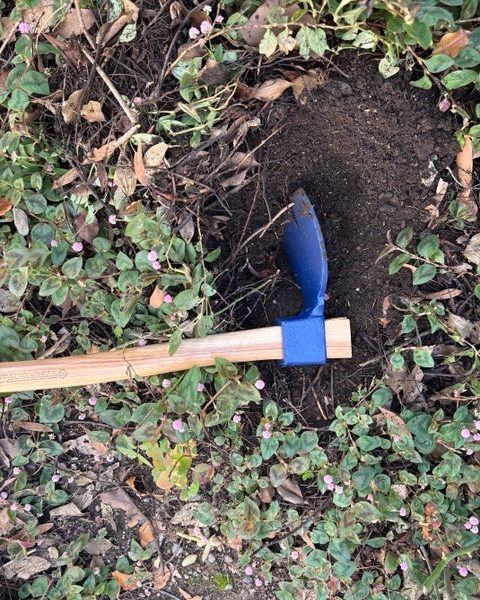
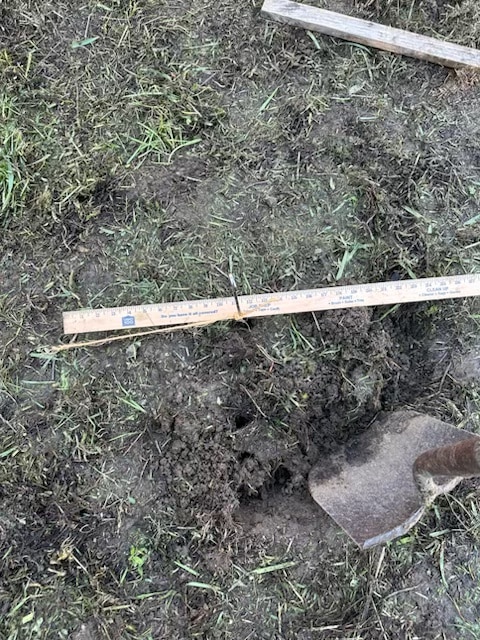
Now you can dig your hole. It should be two to three times as wide as the root spread and as deep as the roots are long. Unless you have claylike soil, you don’t need to amend the soil. A bowl-shaped hole, not straight walled, will encourage the roots to spread instead of circling into a knot. This will give your tree a sturdy foundation.
You want the tree to be planted on a mound, so it doesn’t get waterlogged during rainy season. In my case, the mounds inevitably sink, but I tell myself the trees would be much worse off if I hadn’t mounded them. Make sure the graft union is pointed toward the northeast to avoid sunburn. Note: when you buy your bare root tree, get it in the ground as soon as possible. You don’t want it to dry out.
My UC Master Gardener friend, Sue Helms, planted two peach trees and one pomegranate over the weekend. She chose the Rio Oso peach because a friend grew those successfully in north Napa, where she lives. In fact, it is an old variety of peach, developed a hundred years ago in Northern California. A freestone peach, it is an excellent variety for canning, freezing or eating out of hand. Peach trees are self-pollinating and can produce fruit in three to five years.
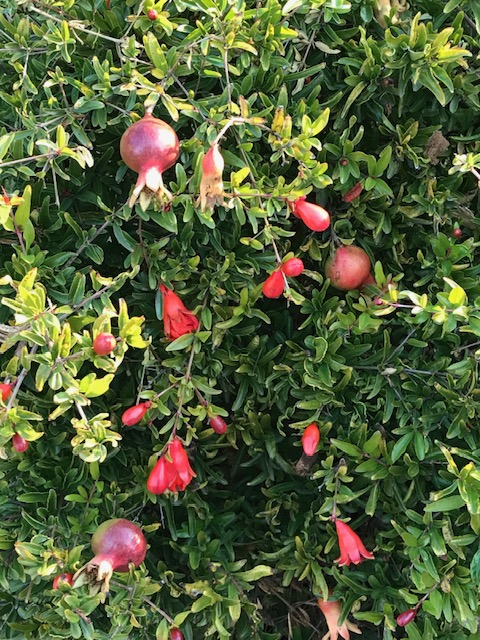
Sue has a sentimental attachment to pomegranates. As a high school activist, she led a petition drive to preserve the pomegranate trees at General Vallejo’s house in Sonoma, where she grew up. The pomegranate originated in Iran and is suitable for our changing California climate because it tolerates drought well. It was brought to California by the Spanish in the 18th century. Pomegranate trees can live for hundreds of years, although older trees don’t produce as much fruit. They do not attract pests. The main one in Napa is—you guessed it—the squirrel. Pomegranates can be trimmed to be shrublike (like the pomegranates at Napa Valley College) or allowed to grow into trees. They will start bearing fruit at two to three years but reach full fruit production capacity at five years. They have male and female flowers on a single shrub or bush. Because of that, pollination usually takes care of itself, although you can assist with a cotton swab.
Sue is a devoted composter, so she didn’t have much trouble digging holes. The soil in her yard is easy to work. She even measured the width and depth of the holes! She figures it took slightly over two hours to get her first tree into the ground.
Once you have planted your tree, water it thoroughly. Apply compost and mulch. Keep the mulch at least four inches away from the trunk. Fruit trees need regular deep watering the first year. Once they are established, you can taper off a bit. After the first year, you may fertilize your trees in spring with a balanced fertilizer. Worm compost is ideal for fruit trees. Keep a garden journal to track your tree’s progress.
I realized the other day, once again, how lucky we are in Napa County to have the ability to grow so much of our own food. A mother and child walked past my daughter’s house while I was picking mandarins, so I gave them some. The were delighted. When tourists wander my neighborhood in January, they marvel at the Meyer lemons.
Fresh-picked fruit is a delight. Of course, before grapes became the main crop in Napa, our valley was famous for its soft fruit. When I moved here in 1990, I met many a former prune-picker. You can pay homage to the old Napa in your own yard and grow delicious fruit yourself.
The UC Master Gardeners of Napa County is having a Library Talk via Zoom in collaboration with the Napa County Public Library on Feb. 5, from 7 to 8 p.m. The topic is Favorite Greens to Grow in the Spring. Go to ucanr.edu/site/uc-master-gardeners-napa-county/event/library to register.
Help Desk: The Master Gardener Help Desk is available to answer your garden questions. Use our online Plant Problem Help Form or email us at [email protected]. Include your name, address, phone number and a brief description of the problem.