One plant, plenty of tomatoes
Last year at this time Napa County Master Gardeners were working hard to have an outstanding spring tomato sale. Our effort paid off: the sale, which helps fund our activities, was a complete success and will be held again this year on Saturday, April 11, in Napa. (Details below).
I was scheduled to do a demonstration at last year’s event on how to grow a tomato in a pot rather than planting it in the garden. After shopping around, I had selected a tall tomato and a large pot. The tomato I chose was Juliet, a small grape tomato with great flavor.
The sale was so successful that we were sold out by 10 a.m. My talk was scheduled for 11 a.m. So, I brought Juliet home and planted her in the ground.
If you remove the lower leaves on a tomato seedling and plant the bare stem deeply, the tomato will generate roots all along the buried stem. Some people plant the seedlings at an angle to encourage even more root formation, but my planting bed is deep enough to plant straight down, with half the seedling above ground and half below. After I removed all the leaves on the lower half, I did an experiment I had never done before. I put three of the leaves into one of my cloners.
A cloner is like a hydroponics chamber in that the end of the stem is continually washed with water to encourage rooting. My experiment worked well. I had three rooted Juliet tomatoes in less than three weeks. They wanted to grow. I potted them up and gave two away. One recipient said it was the best tomato she grew that year.
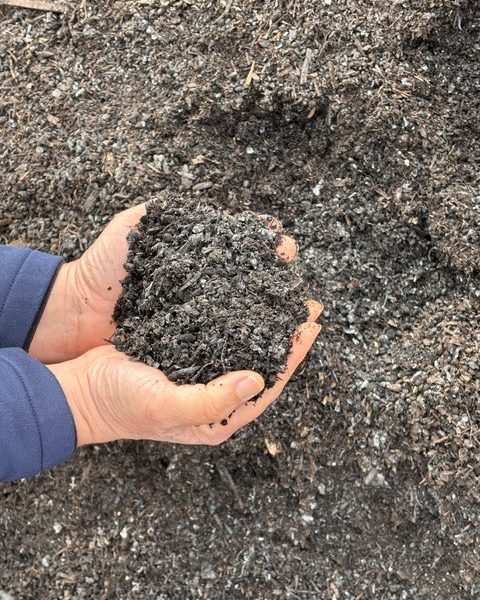
I used garden soil in the pots, the same soil my other tomatoes were growing in. I have steadily improved this soil over the years, and every year I add amendments. Sometimes I do sheet mulching in winter. Other times I cover the beds in late autumn with dried leaves. The soil drains well and does not become waterlogged. When I plant a tomato seedling, I put a dose of my worm compost in the planting hole.
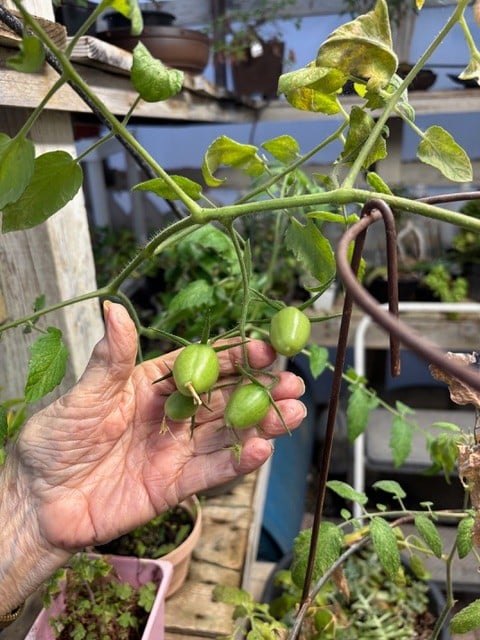
The original Juliet went into a garden bed with my other tomatoes. The cloned Juliet in the pot that I kept is still doing well. In November I had the pot moved into my hothouse to see if Juliet would continue to produce and would survive the winter. I kept a log of her production, and I am pleased that she has thrived. I visit her daily and flick her blooms. I talk to her a bit and cheer her on. And I have harvested 14 tomatoes. That’s not a lot, but I am delighted to get any.
Let me explain why I shake the plant, which I do to all my tomatoes. Tomato flowers are self pollinating. However, something has to move the pollen around, whether it’s the wind, a bug, a bee or a hand. I am helping this process by agitating the blooms a bit.
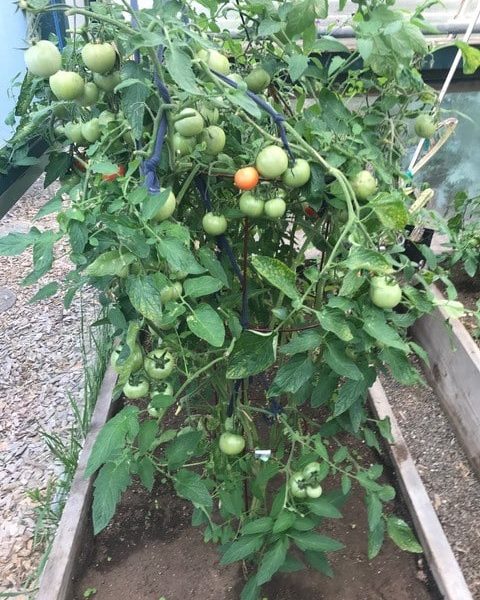
The Juliet I planted in the ground last spring eventually took over the bed. She out-produced my other varieties and flung her stems over all the other tomato cages. I grazed on these little grape tomatoes when I was outdoors and they were so tasty. She gave me her last fruit on Nov. 21, long after all the other varieties were done.
Juliet has continued to produce in the hothouse, and I have continued to graze. Currently there are seven green tomatoes waiting to ripen.
My plan is to move the pot outside in April and ty to clone cuttings again. We’ll see if the results are the same. In the meantime, the potted plant will go into the ground.
Mark your calendar now for our popular tomato sale on April 11, in the UC Cooperative Extension parking lot at 1710 Soscol Ave. in Napa. We’ll have more seedlings this year than last year. The sale starts at 9 a.m. and ends when we’re sold out. Customers tend to start lining up at least a half hour before to be sure of getting their favorite varieties.
For more details on the tomato sale, visit our website. Here’s a list of the tomatoes we’re offering this year. And if you have problems during the growing season, contact the Master Gardener Help Desk (hours below).
Workshop: Join UC Master Gardeners of Napa County for a workshop on “Worm or Backyard Composting” on Saturday, March 28, from 10 a.m. to noon, at Skyline Wilderness Park in Napa. Park entrance fee is waived for registered workshop attendees. Get more information and a registration link here.
Workshop: Join UC Master Gardeners of Napa County for a workshop on “How to Plan Planting a Vineyard” on Saturday, March 28, from 9 a.m. to noon. Learn how to evaluate your site, prepare the land and plan the layout. Register here to receive the workshop location.
Library Talk: Join UC Master Gardeners of Napa County and Napa County Library for a talk on “Perennial Edibles” on Thursday, April 2, from 6 to 7 p.m. via Zoom. Discover how to add edible plants to you garden for ongoing bounty. Register to get the Zoom link.
Help Desk: The Master Gardener Help Desk is available to answer your garden questions. Use our online Plant Problem Help Form or email us at [email protected]. Include your name, address, phone number and a brief description of the problem. You can also visit us in person on Mondays and Fridays from 10 a.m. until 1 p.m. at the UC Cooperative Extension Office, 1710 Soscol Ave., Suite 4, Napa.