Planning for a hotter future: Rethinking trees in Napa County’s cities
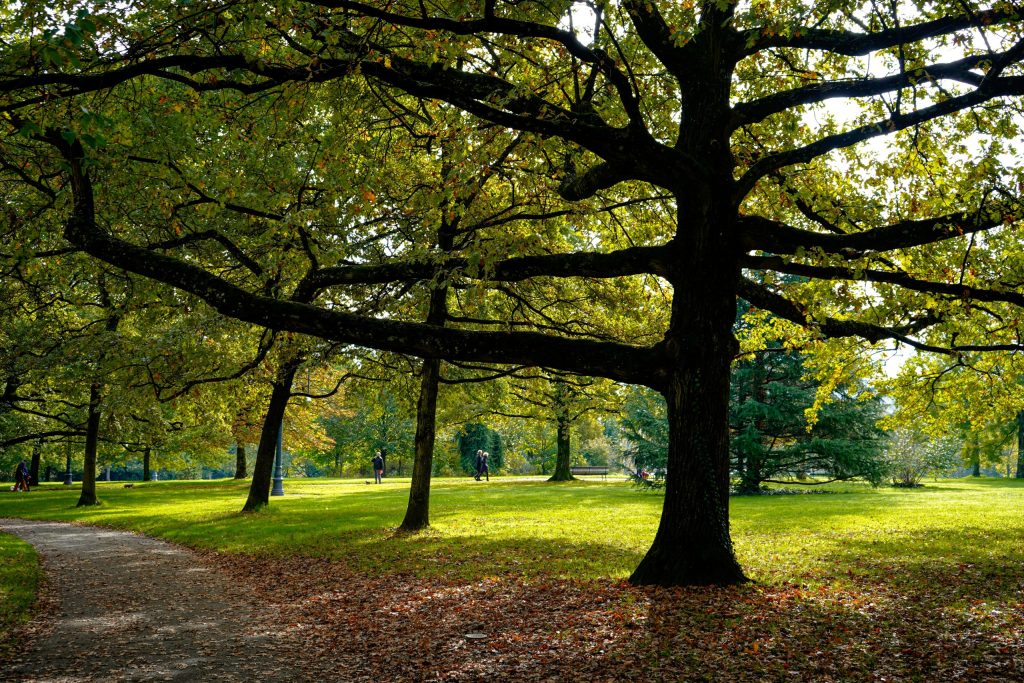
Urban trees provide shade, improve air quality and help moderate temperatures in California’s cities. Yet as climate change brings hotter weather and longer periods of drought, many commonly planted tree species may struggle.
In a recent lecture, Dr. Igor Lacan, interim county director and Bay Area environmental horticulture and urban forestry advisor with UC Cooperative Extension, discussed how communities can adapt tree planting and management to meet the challenges of a warming climate.
Dr. Lacan’s presentation examined how climate trends, including rising temperatures, declining snowpack and increasing atmospheric dryness, are already reshaping urban environments. In Mediterranean regions such as the San Francisco Bay Area, these shifts are expected to intensify through the end of the century, bringing warmer temperatures, greater variability in rainfall and increasing drought stress.
These changing conditions are already affecting tree health. Heat and drought stress can impair tree physiology, reduce growth and increase susceptibility to pests and disease.
Napa Valley residents have seen how climate extremes can affect the landscape. Intense heat waves and recent wildfire seasons have placed additional strain on both natural ecosystems and neighborhood trees.
Sidewalks, rooftops and parking lots absorb heat during the day and slowly release it at night, making developed areas several degrees warmer than nearby open land or vineyards. This phenomenon, known as the urban heat island effect, can increase trees’ water needs and worsen the impacts of drought, placing additional stress on trees growing along streets, in parks and in residential areas.
Because precise long-term models for predicting tree performance remain limited, Lacan described a practical method known as “space-for-time substitution.” Rather than waiting decades to see which species survive, researchers compare a city’s projected future climate with the current climate of another, warmer city. By studying which trees already thrive under those conditions, communities can make more informed planting decisions today.
Lacan emphasized that adaptation must begin now, especially for mature trees. Efficient irrigation before, during and after heat waves or drought can make a meaningful difference.
He encouraged communities and homeowners to consult SelecTree, an online urban tree selection guide developed by California Polytechnic State University at San Luis Obispo, which provides detailed information on hundreds of commonly planted landscape trees.
For irrigation guidance, Lacan recommended visiting the California Center for Urban Horticulture at the UC Davis. The site includes research on efficient irrigation systems such as R-SIG and trickle-drip systems, along with a calculator that helps determine how much water established trees need.
Maintaining healthy trees in Napa Valley’s neighborhoods will require thoughtful planning, selecting species that can tolerate warmer conditions and using water wisely. By preparing now for the climate ahead, communities can help ensure that the trees lining our streets and shading our parks and yards continue to provide cooling shade, wildlife habitat and beauty for generations to come.
Composting Workshop: Join UC Master Gardeners of Napa County for a free backyard composting workshop on Saturday, April 25, from 10 a.m. to noon at Skyline Wilderness Park, 2201 Imola Ave., Napa. No park entrance fee for registered workshop attendees. At the end of the workshop, you may purchase a discounted compost bin for $20. Register here.
Library Talk: Join UC Master Gardeners of Napa County and Napa County Library for a free talk on “Growing Cown: Our Field Test Favorites” on Thursday, May 7, from 7 to 8 p.m. via Zoom. Master Gardeners experimented with corn in home gardens and share their findings. Register here.
Tree Walk: Join UC Master Gardeners of Napa County on a free guided tree walk in Napa’s Fuller Park on Friday, May 8, from 10 to 11:30 a.m. Discover some of the many exotic and native trees in this historic park. Meet at the corner of Jefferson and Oak. Space is limited and registration is required for each participant.
Help Desk: The Master Gardener Help Desk is available to answer your garden questions. Use our online Plant Problem Help Form or email us at [email protected]. Include your name, address, phone number and a brief description of the problem. You can also visit us in person on Mondays and Fridays from 10 a.m. until 1 p.m. at the UC Cooperative Extension Office, 1710 Soscol Ave., Suite 4, Napa.