The Loose Cannon: Antique bottles tell tales of Napa Valley’s past
I don’t remember how we got started, but my brothers and I got hooked on collecting antique bottles in our teens and 20s. We spent lots of time searching for old trash dump sites and then digging through them in search of old bottles. Sounds gross, but really it was not.
We were searching for dump sites that were maybe 100 years old. The older, the better, but even dumpsites from the late 1800s yielded some nice finds. Being that old, anything organic had decomposed and was unrecognizable. Glass bottles survived the years better than almost anything else.
Most of the sites we found wouldn’t have even been noticed for what they were by the average person. The surface might show a piece of cast iron, something rusty or maybe pieces of broken plates or bottles. Over time, almost no bottles survived the years intact on the surface. If they survived fires, they were frequently used for target practice, whether for a rifle or a thrown rock.
Finding old dump sites is almost an art. You have to know what to look for and where. Years ago, it was common practice for folks to haul their trash to a bridge and dump it where it would get carried away with the high waters. Some of our most productive sites were next to the bridges in Oakville and Pope Street in St. Helena. And while we never found one, the pits from old outhouses often yielded intact bottles.
The picture below was taken from the footbridge over Hopper Creek just north of the French Laundry Garden. I spotted what appears to be an old car jack. Can you spot it?
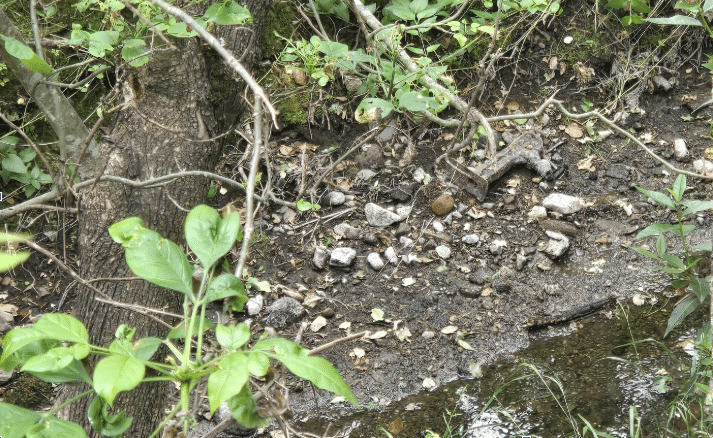
It is still there as of this writing. The car jack is likely from the early 1900s, making it newer than most bottles that would be of interest. But it was common for trash dumps to have existed in the same location for many years. Newer trash often covers much older trash. And considering that Yountville was being built up in the middle 1800s, Hopper Creek was a likely dumping area.
One evening my brother Larry and I were digging in the old dump site near the Pope Street Bridge in St. Helena. We found several Johann Hoff beer bottles. Another collector passed by and admired the bottles. We kept digging until it got too dark. We returned early the next day to continue digging at that spot. But the other collector must have returned and dug through most of the night at the spot we discovered. No more bottles were there to be found—that lousy claim-jumping bastard!
The Johann Hoff bottle shown below is listed on ETSY for $99:
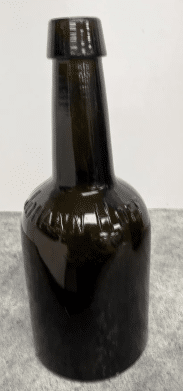
“Up for sale is a vintage Johann Hoff’s Malt Extract bottle, crafted from deep olive green glass. This historic bottle once contained the popular malt tonic marketed as a health supplement in the late 1800s and early 1900s.”
I chose to share the story of this bottle because its contents were so representative of many of the bottled products of that era.
From the Historic Glasshouse website: website:
“The Hoff product was malt extract and was marketed as a medicinal tonic for those who were convalescing, with general disability, the weak, nursing mothers, etc. But the bottom line is this — this was a product containing alcohol, plain and simple. It was beer in medicinal packaging. Much like bitters, this was a clever way of selling alcoholic drinks to a public that wrestled with temperance and later, prohibition.”
I gifted all of my collected antique bottles to my brother Larry, except for these four:
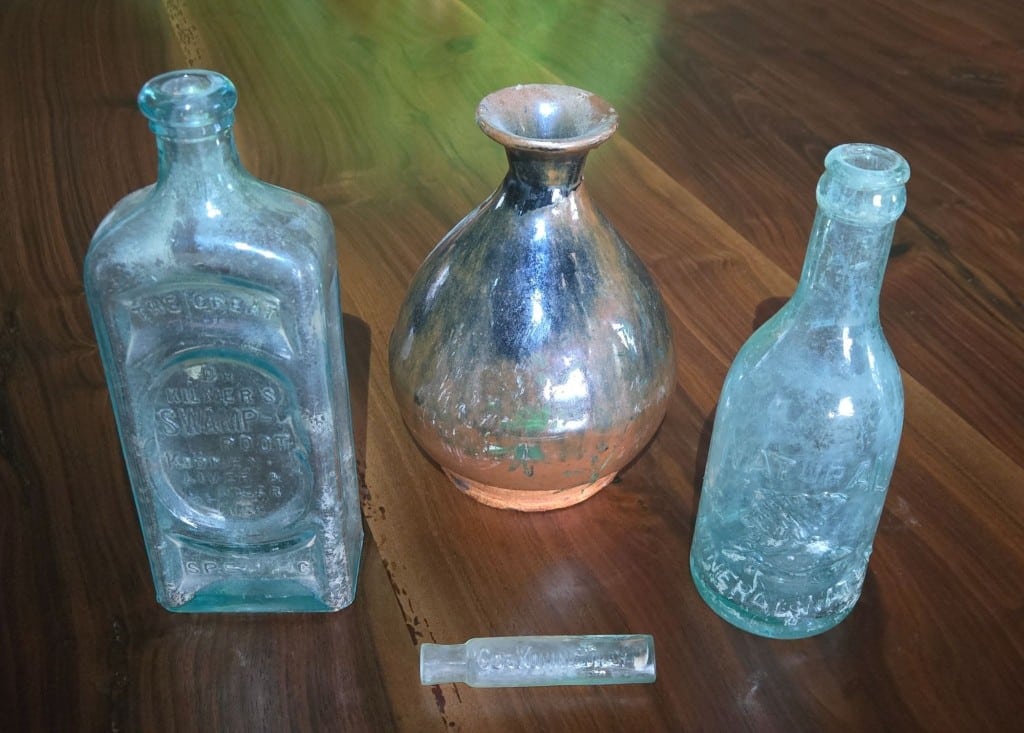
The bottle on the left has always been my favorite: The Great Dr. Kilmer’s Swamp-Root Kidney Liver and Bladder Remedy.
From the National Park Service website:
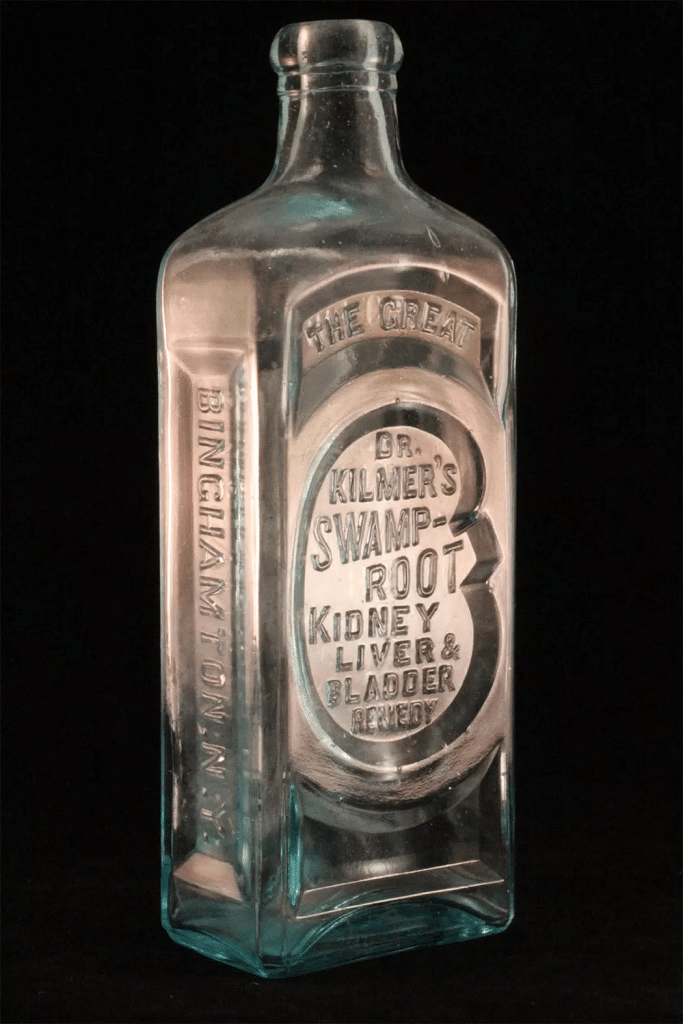
Dr. Kilmer’s Swamp Root Remedy Bottle
(Fort Stanwix National Monument Museum Collection FOST 2163). NPS Photo
“Like so many other patent medicines of the times, Dr. Kilmer’s cures were a mix of roots, herbs, and a hearty dose of alcohol. While it is possible that these plant-based additives did lend healing properties, it was more likely that any relief experienced by those taking the remedy was due to the substantial amount of alcohol present.
However, unlike many other patent medicines, Dr. Kilmer’s Remedies did not contain any morphine, opium or cocaine that were so often included in medicine formulas.”
To learn more about the Kilmers, I offer this link from Antique Bottles titled “The Kilmers of Binghamton, New York.”
The top item in that picture is a Ng Ka Py Chinese alcohol bottle. Not surprising considering all the Chinese that were brought into the valley for manual labor. We found lots of these broken bottles, but only this one fully intact. There was writing on the bottle that is now unreadable.
That bottle on the right is a Priest Ranch Mineral Water bottle. Below is a very cleaned up bottle that is listed for sale online (note the embossed image of a priest).
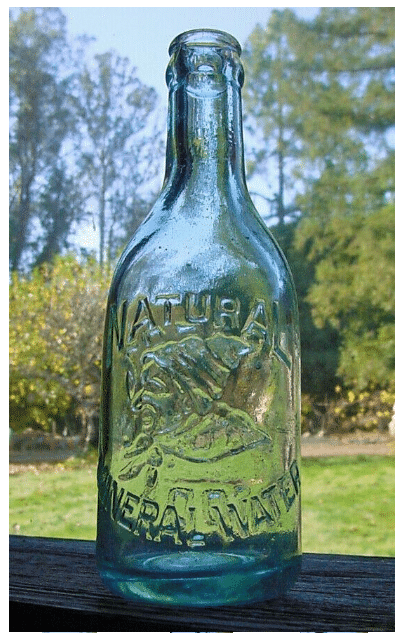
And yes, this is the venture that eventually led to the Priest Ranch Winery with a tasting room right on Washington..
From their website:
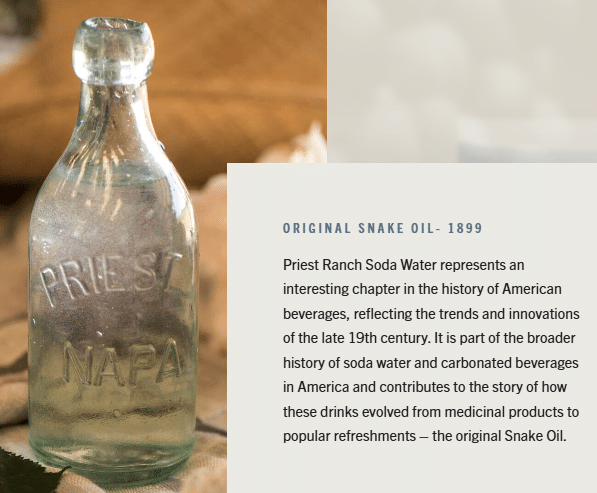
Priest Ranch mineral water bottling was in production from the late 1800s until around the early 1900s, spanning approximately 30 years. Over those years, the bottles had many designs. On the Priest Ranch tasting room mantle here in Yountville, they have the two bottles shown below.
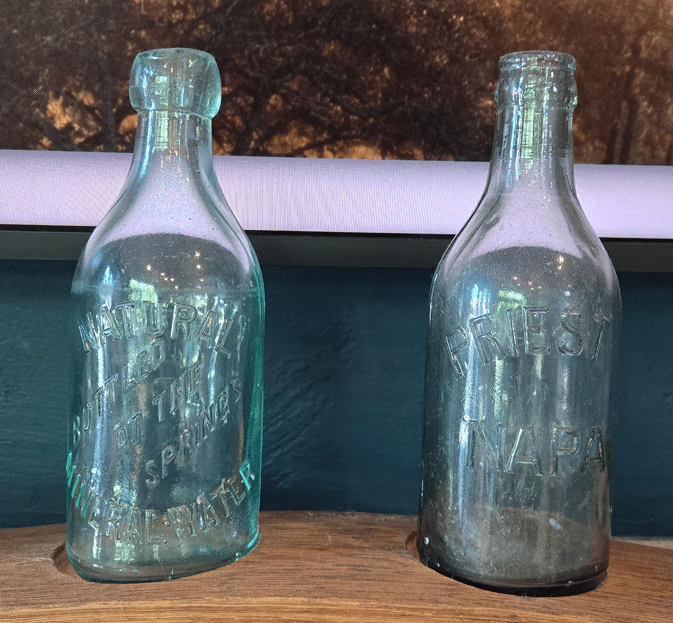
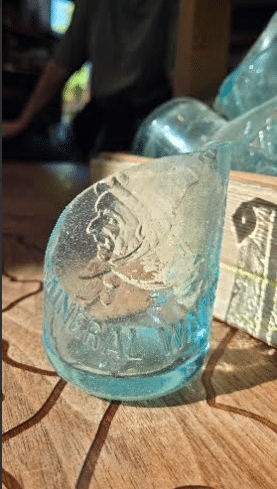
The bottle on the left had a “blob” top, and the other a “soda pop top” or crown top. As you might assume, the blob top bottle was older.
They also have a box of broken bottle pieces. One of which has the Priest image. Mara, in the tasting room, was kind enough to help me get these pictures.
The pop top bottles probably go back longer than you might think as evidenced by this patent application for a bottle sealing device:
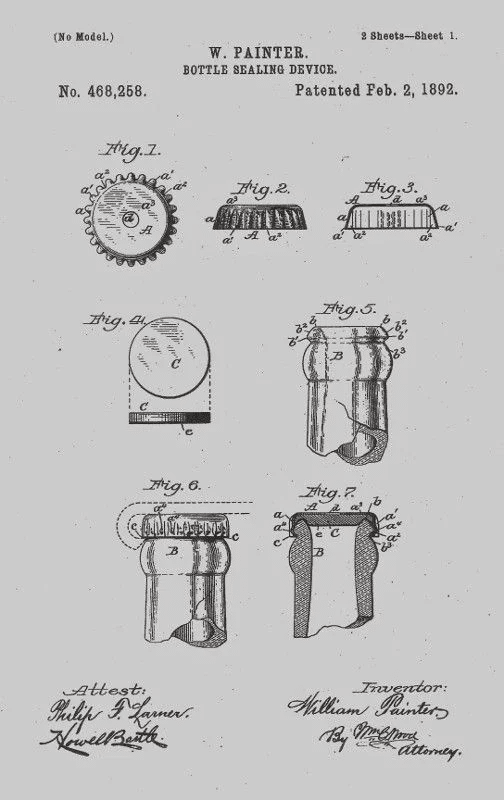
Isn’t the quality of those drawings amazing for 1892?
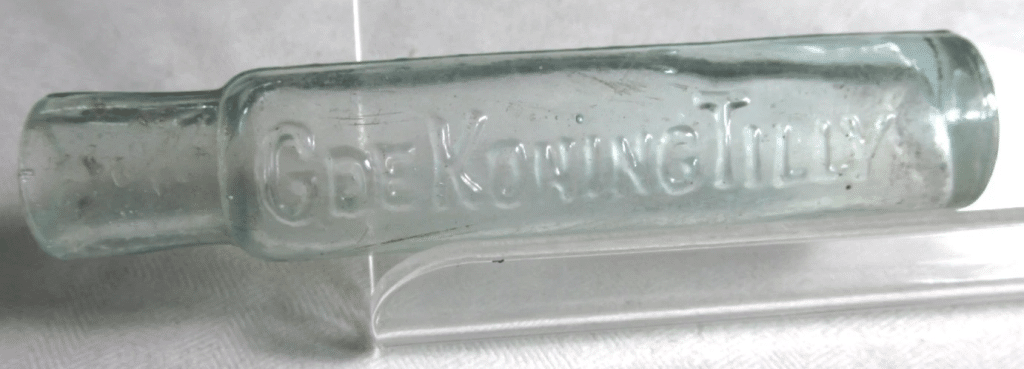
That small bottle in front was probably an opium bottle, as described in this listing on EBAY:
ANTIQUE OPIUM BOTTLE GDE KONING TILLY,
Aqua 3 3/8 inches, Crude Little Bottle
Lastly, this advertisement might leave you smiling:
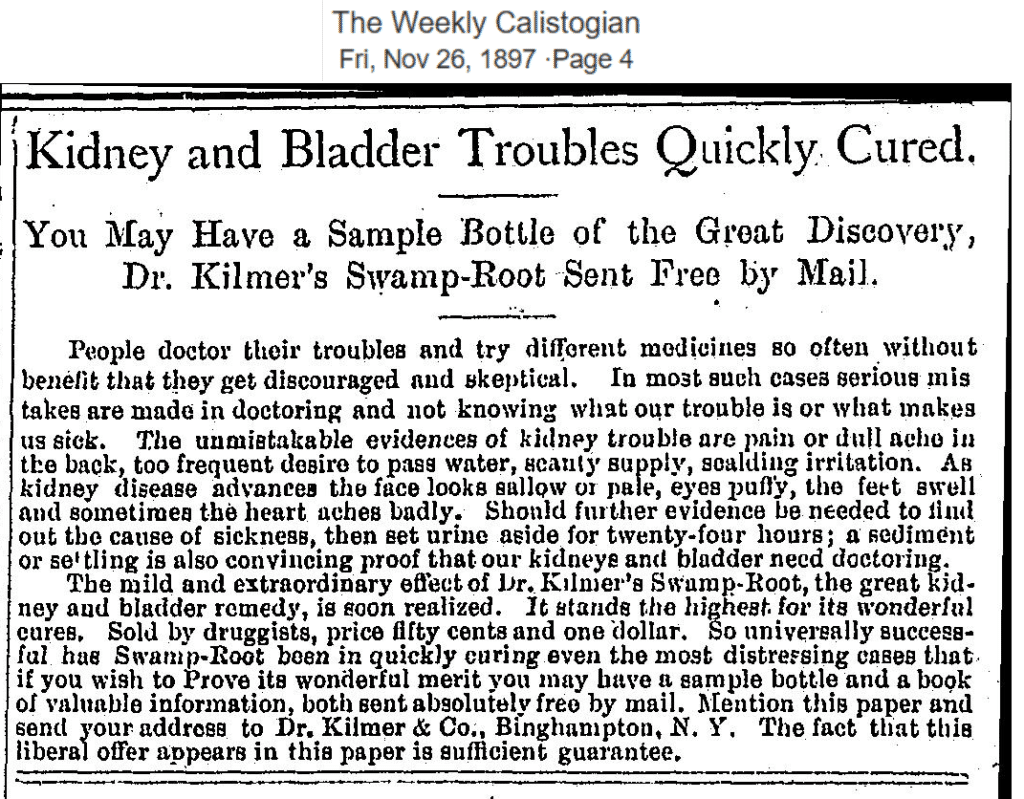
Note the legalese in that last sentence: “The fact that this liberal offer appears in this paper is sufficient guarantee.”
Ranndy Piña
YountvilleOldGuy@Gmail.com
Editor’s note from Lisa Adams Walter: During my childhood, my parents would take us to the “old dumps in the Nevada desert” to hunt for treasures such as old bottles. I honestly don’t know how I survived traipsing around near Winnemucca, NV (both in the heat of the summer and during freezing wintertime breaks) with my mom and her eccentric, childhood friend Loretta just looking for “stuff!” This column from Rnndy reminded me of those crazy times. His childhood treasure hunts sound much more enjoyable!
Editor’s note from Sasha Paulsen: What a fascinating article! It reminded me of an archaeology class I took at UC Berkeley. The professor told us: “You realize that what we archaeologists do is search through ancient trash.”
Sponsored
Author