The Loose Cannon: Holding the line on history, the family that kept Yountville’s windmill standing

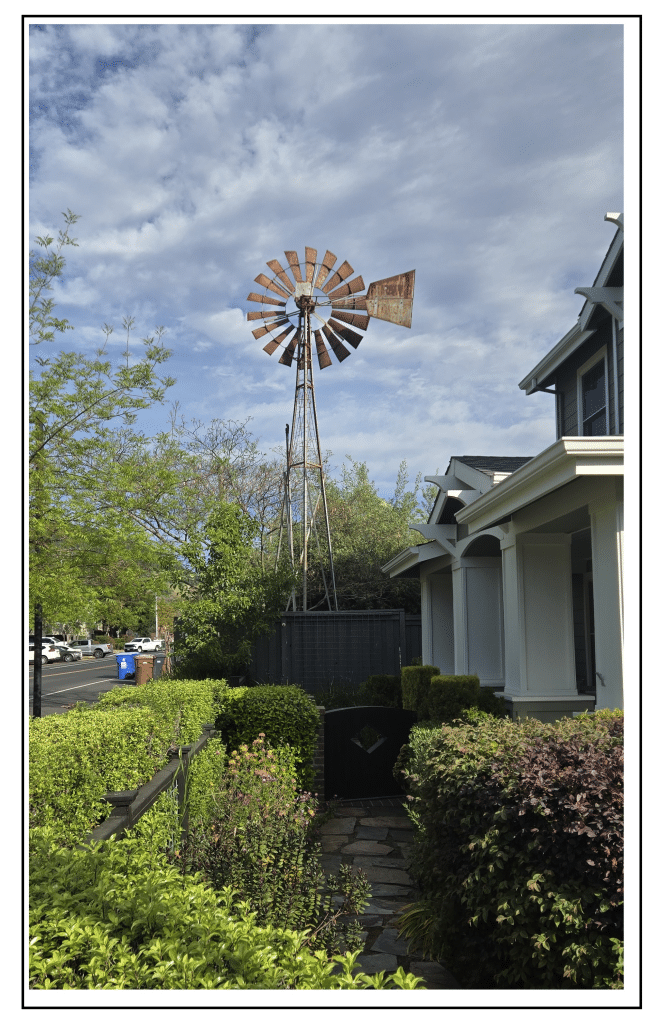
After I wrote the column about the windmill on Yount Street, I received an email from Lisa Duff Khajavi who lived with her family in Yountville from 1978 (first living on Starkey St.) until she graduated from Justin-Siena High School in 1982 and moved away to attend Pepperdine University.
Her folks, James Lee and Lorna Duff, bought the Yount Street property in 1980 from Roy S. Lyon, and her sister still resides in town. In the letter that follows, Lisa shared what her mom could remember about the windmill.
While I frequently query folks for Yountville historical information, I have never received such a lengthy and informative response.
I hope that the future owners of that property share the same appreciation for that windmill that Lisa’s folks did. As you will read, it was only their dedication to keeping that windmill in its original location that it wasn’t moved out of Yountville.
Letter from Lisa Duff Kkajavi to The Loose Cannon:
“My dad, James Lee Duff (passed in 2020) was born at the St. Helena Hospital and raised on the grounds of the Yountville Veterans Home where he lived with his family until he graduated from high school and went off to Cal Berkeley. He attended the Yountville Community Church and Yountville Elementary School and then middle and Napa High School. As a family we returned to Yountville in 1978, after Dad’s career in the military. Mom and Dad purchased 6774 Yount St.
Here is what my mom, Lorna Duff, (89 yrs old) recalls, including details about the windmill.
1. The date of original construction for the property is 1917 for the carriage house (main house), which was part of the original Lande Property and Orchards (Lande Way area).
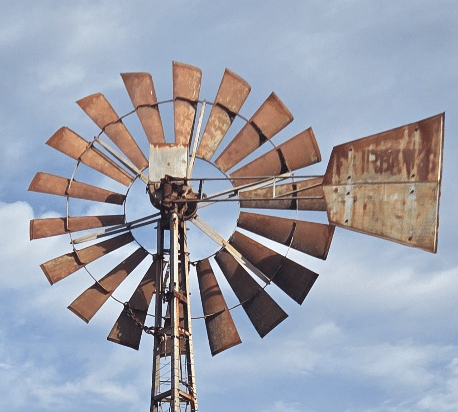
2. The second owner, Roy S. Lyon, found a Fairbanks-Morse vintage steel windmill, supposedly somewhere in Pope Valley. He dug a well on the property and installed the windmill. We are not sure of the date.
3. My parents bought the property in 1980 and at that time the windmill and pump were functioning and drawing water from the well, which is what my parents used to water my mom’s beautiful and ample garden. They kept up the maintenance and use until two things happened around the time of each other in the early 1980s:
a. The pump was a very particular tricky brand to fix, and the father and son team in Sebastopol that would maintain the pump went out of business.
b. The town of Yountville came by and wanted to be sure my parents knew that they were no longer allowed to use the well and access the water table. So, the windmill and pump have not been used since then.
4. During the time my parents and I lived in the house, before they moved out of the country and started renting the property, several vintage/antique enthusiasts offered to buy it, including a couple of winemakers. The most persistent one of them was Warren Winiarski of Stag’s Leap Wine Cellars who won the 1976 Judgment of Paris blind tasting for his 1973 Stag’s Leap Wine Cellars Cabernet Sauvignon.
Whenever my parents would visit his winery for tastings or see him around town, he would ask them, “Are you ready to sell the windmill yet?” My dad kept saying, “It belongs with our house, we need to keep it!” Mr. Winiarski and my parents, James and Lorna Duff, shared down-to-earth natures and deep appreciation and love of Yountville and the Napa Valley. Mom and Dad didn’t want to sell the windmill, but since they were friendly with Warren and he was quite the collector of vintage and antique items, they gave him an antique wheelbarrow.
5. We are not sure if it is Yountville’s last windmill.
6. Fairbanks, Morse & Company marketed the popular Eclipse windmill, later adding steel windmills to their line, which became iconic for pumping water on farms, ranches and railroads in the late 19th and early 20th centuries. Following their acquisition of the Eclipse Wind Engine Company, Fairbanks Morse provided durable, high-quality wind-powered systems recognized by their sturdy construction and efficient, self-governing designs.
Key aspects of Fairbanks Morse Steel Windmills:
Origin: Originally created by Rev. Leonard Wheeler, the “Eclipse” windmill design was so effective that Fairbanks, Morse & Co. became the exclusive sales agent, later acquiring the company.
Design and features: These windmills were designed to pump water efficiently and featured a patented friction clutch and, in later models, durable steel construction rather than wood.
Usage: They were staples of American agriculture and the railroad industry (used by Chicago and Northwestern, Union Pacific, etc.) for filling water towers, particularly during the 1870s-1920s.
Legacy: Known for reliability in harsh conditions, these mills were often called “Steel Eclipse” and are often still seen on historical, rural landscapes.
Evolution: The company grew from these windmills to become a significant manufacturer of engines, pumps, and eventually, power systems.”
Ranndy Piña
[email protected]
Sponsored
Author