The Loose Cannon – Susan the Apache, Part Two

At 5 a.m., exactly 32 minutes after my last column post, I received a 1,016(!) word response to my column that started like this:
“Good morning Dad – great article about the code talkers. And also, in regards to the term “Indian giver” and “going postal,” I am curious how old you think your youngest reader might be? Because at a spry 38 years old, both of those terms are familiar to me – and their backgrounds – you might be overplaying how ‘old’ you really are, Yountville Old Guy!”
Insolent youngster! Fair enough – I don’t want/need to mislead anyone – I’m 74.
Lin suggested I consider “YountvilleGoofyGuy” for an email address.
I had planned to share Susan the Apache – Part 2 last week. But after my conversation with my neighbor about Indian Givers and Code Talkers, I came home and felt I had to start on that column. I wanted to start on that column. The more I got into it, the more inspired I got and the more digging I did. It ended up being one of my personal favorites.
The column was dark, but I felt it was the least I could do to make the plight of the Native American Code Talkers more widely known. They suffered abuse and discrimination, but still fought, died and earned their place in American history. They were true American heroes, and their stories should not be treated as an embarrassment to the US.
This despicable action needs to be overturned!
Susan the Apache Part Two
In a previous column, I mentioned the headstone of Susan the Apache buried in the Yountville Cemetery. Once again, I called on Yountville Cemetery resident historian Denise Ratterman Jackson for help. Denise and I have communicated via text, email and phone calls countless times to verify the details of this column.
Denise recalled that she had seen additional notes on Susan. That sent her digging through several boxes of documents to which she has access, related to the cemetery.
Denise found a typed copy of a “Letter from Florence Derby Graham to Anne Bancroft, June 14, 1959” titled “THE REDEEMED APACHE:”
“Emma, the daughter of Celia Bancroft Derby, married Capt. A.H. Nickerson. They were stationed at Fort Whipple, Arizona, where he was aide-de-camp to General Crook.”
Emma Derby: “There, in General Crook’s cabin, I was born. Also my little sister who lived only a year. My mother made her second or third, and last trip out of Arizona with two babies and two nurses. One nurse was an old soldier. The other nurse was Susan, a 12 or 13 year old Apache Indian girl somehow left behind in an Indian raid. After reaching S.F., contrary to orders, attempted to carry me down the stairs, dropped me, and a front tooth was knocked out. Then my parents decided Susan was not a desirable nurse maid, and Grandpa and Grandma adopted her and she lived with them in Napa Valley until she died of tuberculosis at the age of 16.”
So, Emma was born in General Crook’s cabin to George and Cecelia Derby in 1847. George died at 30 and years later Cecelia married George Kenny. It was Cecelia’s mother and father that adopted Susan. They are Ashley Azariah Bancroft, Jr. and Lucy Dameris Bancroft (Howe), both buried in the Yountville Cemetery.
Interesting note from Wikipedia:
George R. Crook (September 8, 1828 – March 21, 1890) was a career United States Army officer who served in the American Civil War and the Indian Wars. He is best known for commanding U.S. forces in the 1886 campaign that led to the defeat of the Apache leader Geronimo… Crook spent his last years speaking out against the unjust treatment of his former Indian adversaries.
Another interesting aside and worth noting, I found this from the website www.geni.com: “The Bancroft family were famously fervent abolitionists… Azariah “Ashley” Jr. was one of the founders of the anti-slavery movement in the 1830s. His family home was documented as a house that served as an Underground Railroad station for fugitive slaves to find shelter after crossing the border into Ohio on their way to Oberlin and then to Vermont and Canada.”
And while Susan was, “…somehow left behind in an Indian raid,” we can only imagine the horrific acts of violence Susan may have witnessed, on her way to being redeemed by the white man.
Wikipedia has an extensive list of Indian massacres by date, in North America. Notes on some of the massacres include gruesome details. This was said about the Battle Creek Massacre of March 5, 1849: “In response to some cattle being stolen, Governor Brigham Young sent members of the Mormon militia to, “put a final end to their depredations.” They were led to a band, where they attacked them, killing the men and taking the women and children as captives.”
And this about the Chetco River Massacre of Feb. 15, 1854: “Nine white settlers attacked a friendly Indian village on the Chetco River in Oregon, massacring 26 men and a few women. Most of the Indians were shot while trying to escape… Shortly before the attack, the Chetco had been induced to give away their weapons as, “friendly relations were firmly established.”
To be fair, the website also describes Indian raids against white settlers. When I was growing up, that was the more common portrayal of Native Americans in movies and on TV.
Rest in Peace, Susan
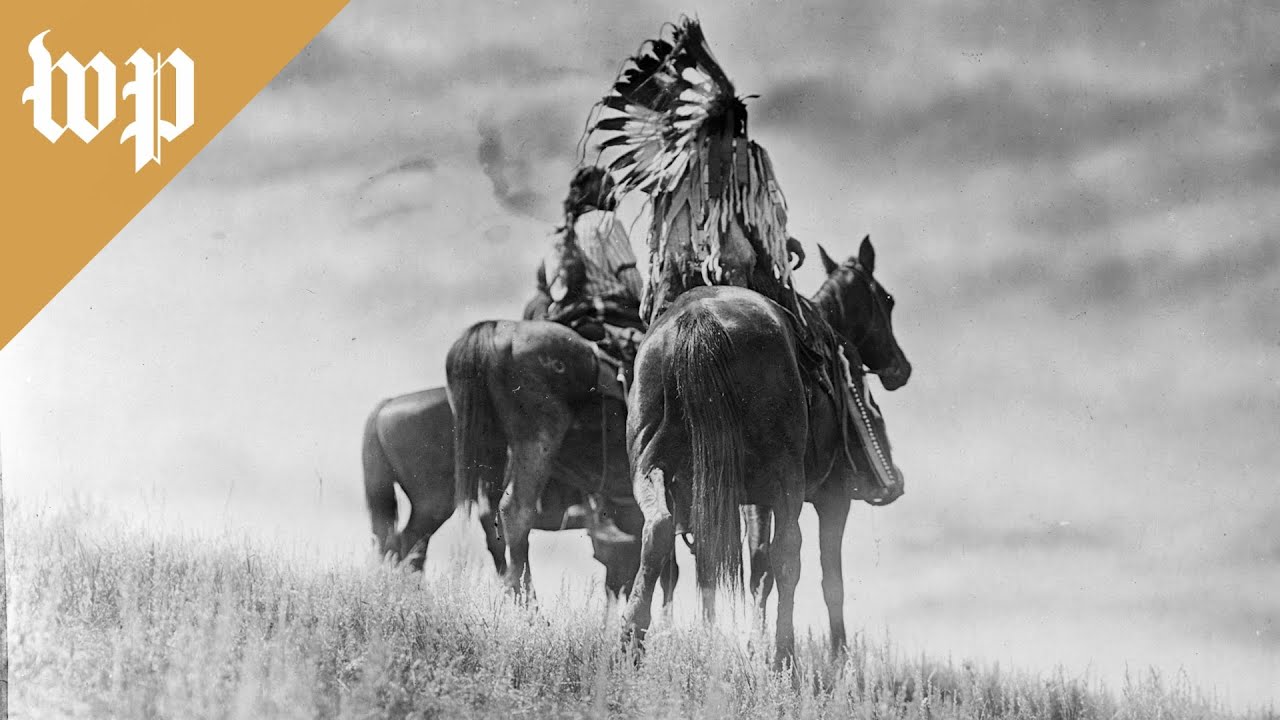
“Ken Burns: Confronting America’s shameful, violent history makes us stronger as a nation”:
Sponsored
Author