The Loose Cannon: Taps and the broken note

I was in the 8th grade sitting in the second seat of the second row behind Sarah Perez in Mr. Tenbroeck’s math class when a garbled broadcast started coming through on the classroom PA system. We couldn’t make out what was being said and assumed it was a radio program meant for another classroom.
After a minute, or two, Mr. Tenbroeck said he would go let them know of their mistake at the office to get it turned off. He was gone several minutes before coming back with a somber look on his face. After getting us all to quiet down, he announced “President Kennedy has been shot.” That was Friday, Nov. 22, 1963, 62 years ago.
Later that day came the picture of Vice President Lyndon Johnson taking the oath of office, with Jackie Kennedy standing next to him in her blood stained pink suit.
From Wikipedia:
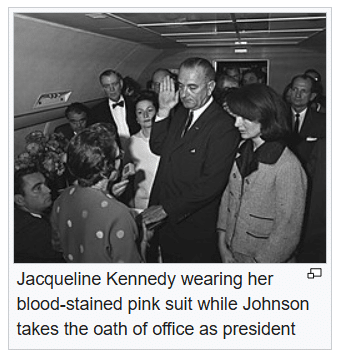
“…Several people asked Kennedy whether she would like to change her suit, but she refused. When Lady Bird offered to send someone to help her, she responded,
‘Oh, no. I want them to see what they have done to Jack.’
“…When photographed during the ceremony, the blood stains were not visible since they were on the right-hand side of her suit. Lady Bird recalls that during the swearing-in,
‘Her hair [was] falling in her face but [she was] very composed… I looked at her. Mrs. Kennedy’s dress was stained with blood. One leg was almost entirely covered with it and her right glove was caked,; it was caked with blood – her husband’s blood. Somehow that was one of the most poignant sights – that immaculate woman, exquisitely dressed and caked in blood.’[6]
“Kennedy had no regrets about refusing to take the blood-stained suit off. Her only regret was that she had washed the blood off her face before Johnson was sworn in.”
The funeral procession was carried on live TV, and I still have many of those images etched in my mind.
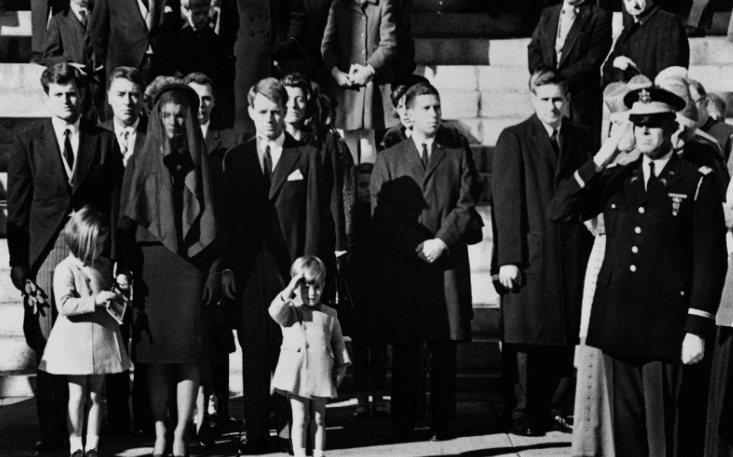
John F. Kennedy, Jr. saluting his father’s passing casket.
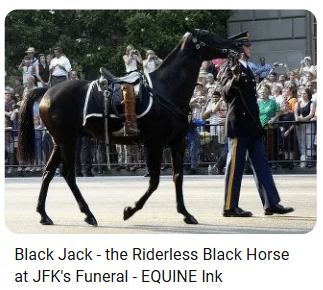
The black stallion with an empty saddle and the boots facing backwards.
Then came the 21-gun salute. The highest military honor, typically reserved for heads of state and dignitaries, which signifies profound respect.

During WWII, President John F. Kennedy (JFK) had commanded PT boats, small, fast and maneuverable motor torpedo boats, in the Pacific Theater.

JFK’s 80-foot patrol torpedo boat (PT-109) was hunting for enemy ships transporting supplies on the hot and pitch-black night of Aug. 2, 1943 in the Pacific Ocean. With almost no warning, at about 2:30 a.m., the Japanese destroyer Amagiri collided with PT-109, cutting it in half.
After PT-109 sank, JFK rescued fellow sailors, earning him Navy and Marine Corps medals.
Following the 21-gun salute, was the playing of Taps.
It was raining and cold at Arlington National Cemetery and the Taps bugler had been standing in the rain for three hours before the 21-gun salute.
The bugler, Army Sgt. Keith Clark, had just played Taps for the president on Veterans Day two weeks earlier. Clark started playing Taps on the world stage of JFK’s funeral when the unthinkable happened.

Clark missed the sixth note of Taps:
YouTube video Taps at President Kennedy’s funeral
That missed note could have been dismissed as just a minor footnote of the JFK funeral with little historical significance. But it wasn’t. Not even 50 years later:
YouTube video A lone bugler’s missed taps note signified a nation’s broken heart
James Swanson’s book, “End of Days,” chronicled the JFK assassination and funeral with these notes:
“One of the most memorable sights and sounds at President Kennedy’s funeral was the broken note of the bugle…”
“That was really the climax of that weekend,” he said. “Nonstop television for four days… And after all the words – millions of words by commentators, published in newspapers, published in magazines, the tragedy ends with a single bugle call.”
“That broken note sort of symbolized what that weekend meant to the American people,” he said. “It’s like a human cry. It’s like the bugle was weeping… It was really the perfect ending to those four days.”
Note to my readers: For those of you that lived through that turbulent November, please feel free to share your memories: [email protected]
Sponsored
Author