Yountville Commons Update – ZDRB and Open House
There is a lot to like in the plans presented for Yountville Commons. It is beautifully designed and thoughtfully planned, due to extensive community outreach over the past six months. Every detail has been considered, and the design creates an overall opulent feel.
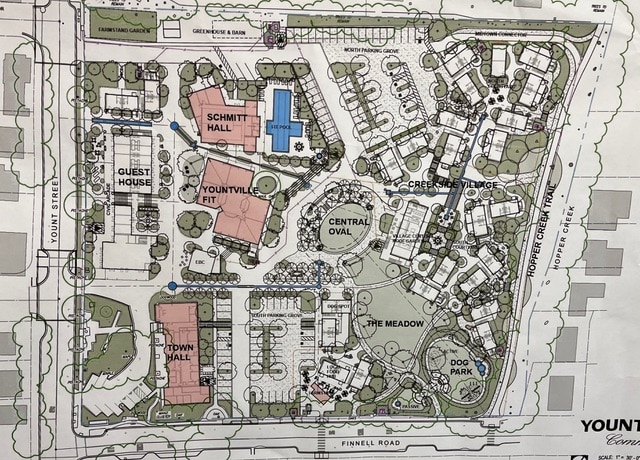
The current plans show 125 units of workforce housing on the 7.5-acre site. These consist of 35 studio and 95 one-bedroom apartments. What was initially referred to as the boarding house/guest house, has been redesignated to be furnished studio apartments available for minimum 30 days rentals. Blocks of two- and three-story L-shaped buildings will occupy about one-third of the site in the northeast corner of the property, with the remainder dedicated to walkways, parks and accessory buildings. Schmitt Hall, the Yountville Fit building and Town Hall will remain as is.
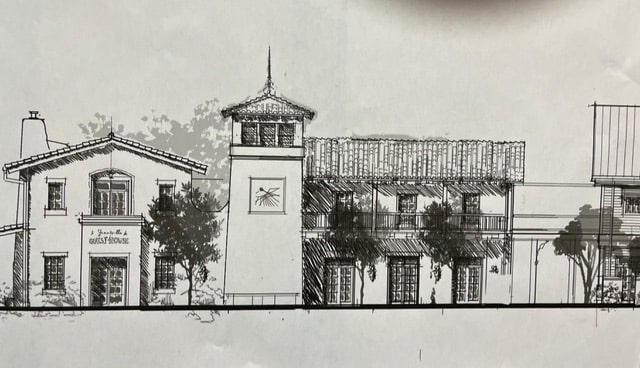
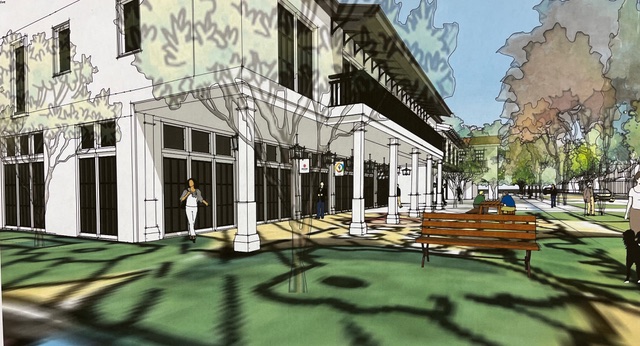
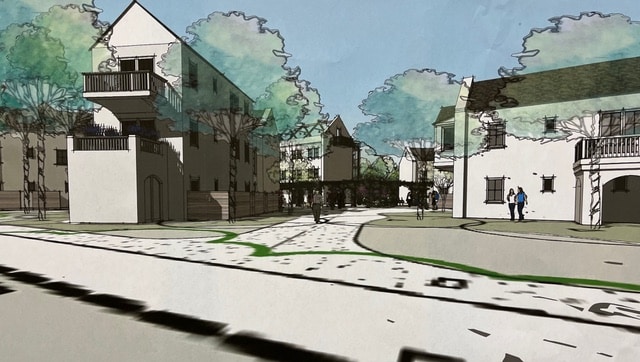
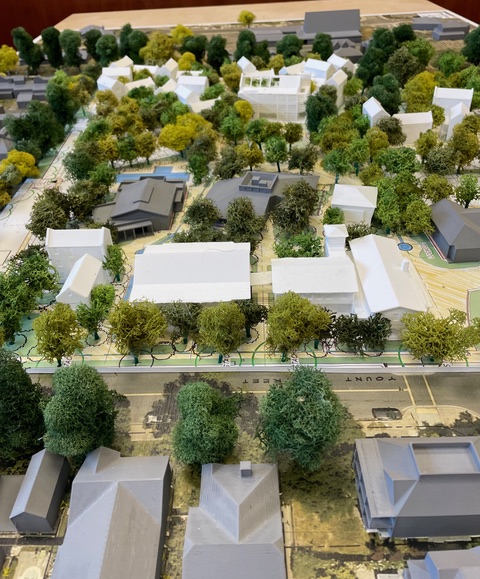
Several images of plans, models and renderings of the future Yountville Commons project. Kimberly Cook photos
All the units are planned as rentals, to be managed by an operational partner with experience in workforce housing. That partner is expected to be selected soon to help create the operational standards for the property and provide input on long-term cost estimates. It is also intended that all units will be deed restricted to avoid their being used as second homes.
One voiced concern is that the entire property will contain only 120 parking spaces. That count includes the 26 spaces currently behind Town Hall used for staff parking, and removing the 30 spaces on Yount Street in front of Schmitt Hall and Yountville Fit. To help with the low number of parking spaces, there will be incentives to reduce the number of cars parked on the property, and there will be a trial run of the availability of Zip-Cars to help solve that question.
The property will be divided into 18 parcels to support financing and phased development options, although the town intends to retain ownership of all parcels. The horizontal improvements, such as soil engineering, road base and underground utilities, will likely be completed first. The vertical improvements, meaning the buildings themselves, would follow, most likely in phases determined by financing options.
The proposed design includes features such as water runnels, fountains, trellises, detailed paving, a mature olive tree grove, a rooftop garden and freestanding buildings rather than shared walls. While visually appealing, these elements may be expensive to construct. The overall concept presents housing within a park-like setting, which differs from the more traditional neighborhood style of Yountville.
As Town Manager Brad Ralston succinctly put it, “When we bought the site, we bought control.” That can mean a lot of different things, good and bad, but it also means that by owning the property and the buildings, the town will receive a revenue stream from the rental income, which is something that Yountville has never had.
This also means that residents of Yountville are in control of the project. Therefore, it is essential that residents stay engaged. Decisions made now will shape the community’s future and have long-term financial implications.
More details can be learned by attending the upcoming sessions, scheduling an appointment with architect Brendan Kelly of Kelly + Morgan Architects, who can answer just about any question, or participating in the study session on Sept. 16 at 1 p.m. in the Town Council Chambers where questions can be asked and answered directly.
The next update from the town will be in January or February and will cover more of the financial aspects as the process moves forward.