Yountville discusses workforce housing plans at packed Commons study session meeting
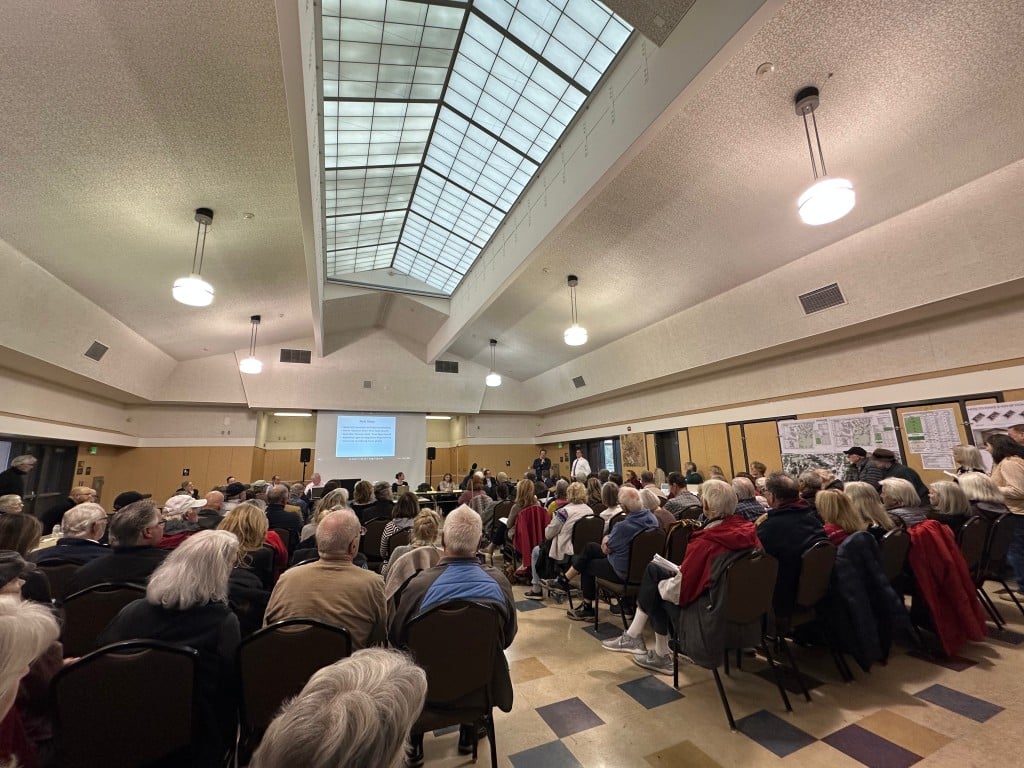
It was standing room only at Tuesday night’s Yountville Town Council Study Session to discuss the Yountville Commons development plans. At the height of the meeting, nearly 150 people gathered in Schmitt Hall at the Commons to hear long-awaited details about the workforce housing project and to ask questions of town staff and consultants.
A post-event press release from the town specified that the materials presented at the meeting focused on workforce housing data, preliminary financial feasibility modeling and conceptual phasing scenarios intended to help guide future council direction.
Yountville Mayor Margie Mohler welcomed the crowd, commending everyone for the great turnout on a rainy day. She explained that while Feb. 17 was originally slated as a regular Yountville Town Council meeting, it was being conducted in the format of a study session, a less formal and more interactive meeting to give the council the opportunity to review one or more items for in-depth discussion. Only one item was on the agenda for the day: the Yountville Commons.
After the event, Mohler emphasized that the discussion reflects a challenge facing communities across the region. “Workforce housing is one of the most difficult issues facing communities today. There are no easy answers, and it requires careful, transparent discussion,” she said.
Yountville Town Manager Brad Raulston said when he was first hired 2 ½ years ago, it was clear from the council and the community that the former Yountville Elementary School site, then owned by the Napa Valley Unified School District, was the number one priority. The town later purchased the 7 ½ acre property.
It was stated that the Commons project has already spent more than $14 million since April 2024, with $11 million on property acquisition and cleanup.
He encouraged attendees to look at the town website for past information that led to this point in the process and said the next steps will be considered at the March 17 Town Council meeting.
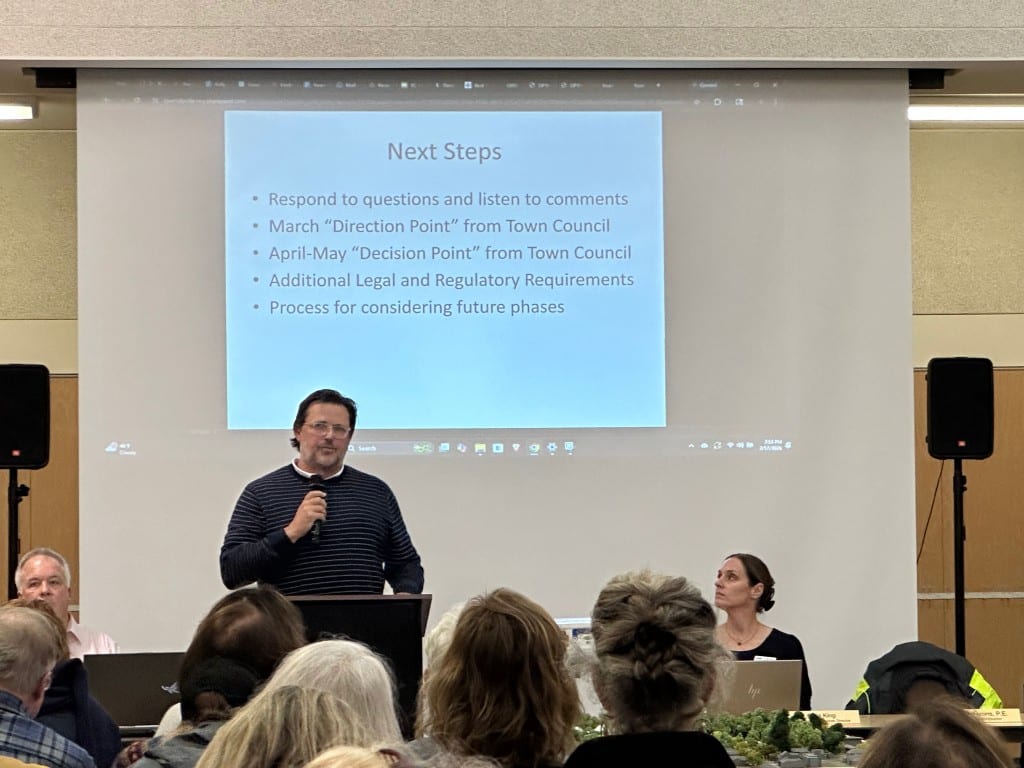
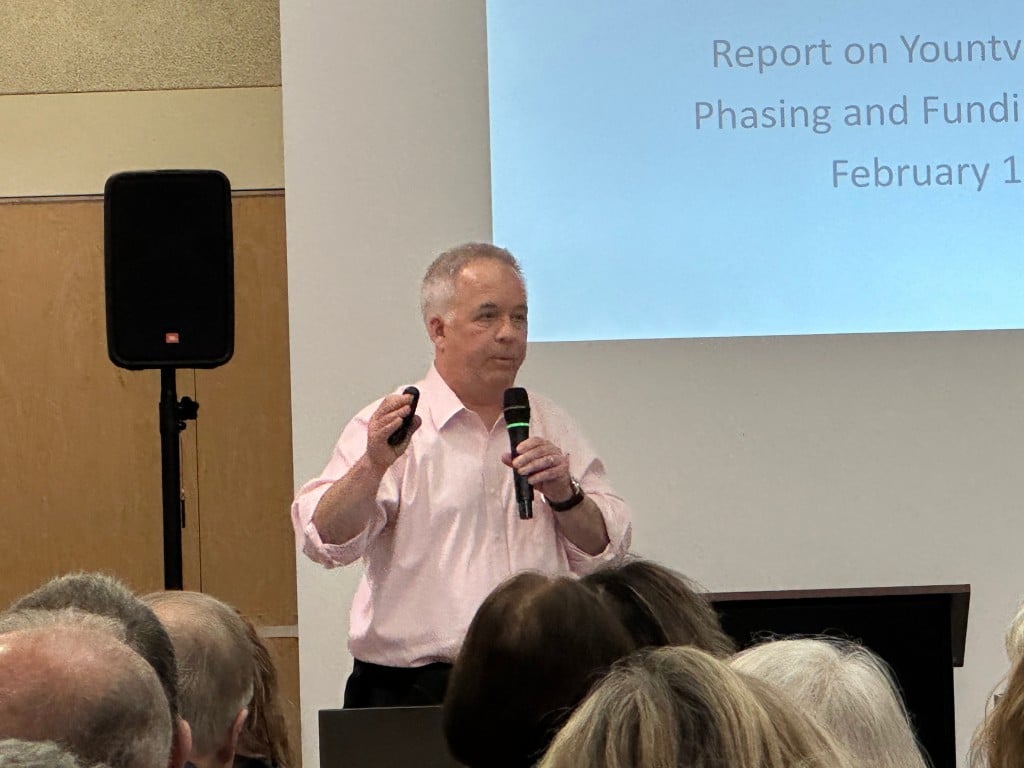
Both consultants and town staff reported on their areas of expertise.
Brendan Kelly of Kelly + Morgan Architects of Napa presented the revised renderings and plans for Phase One of the development. The original design included 12 to 14 housing buildings with up to 120 units. The revised Phase One now proposes five buildings containing 30 to 40 units. The reduction in size reflects what the town believes it can potentially afford at this time.
Matt Kowta of BAE Urban Economics based in Berkeley followed with an analytical overview of unit mix, rental rates and basic project financials. The report concludes that Yountville has a clear shortage of rental housing, particularly studio units. The lack of studios was cited as justification for the relatively high number of studios included in the Phase One plan, although this was not based on any current survey of employers or employees who work in town.
Melissa Shick of KNN Public Finance, also based in Berkeley, outlined possible financing options for Phase One. The proposal includes using $5 million in cash currently on hand, a $4.6 million bank loan and approximately $16 million in bonds to fund construction of the 30–40 units. The costs of this plan work out to $800 per square foot for construction.
Questions and comments
No time limit was placed upon members of the public who wanted to speak or ask questions. Concerned citizens and businesspeople speaking included Arik Housley, Tom Bardessono, Michael Minnillo, Carrie Hays, Bob Blevans, Majel Arnold, Julie Worthington, Kathy Stegman, Dee Heizer, Traci Sanderson and Jay Caldwell.
It was clarified that the priority for the housing is for local workers.
Estimated rents are currently projected to be:
- $1,500–$1,700 for 330 square foot studios
- $1,800–$2,400 for 660 square foot one-bedroom units
- $2,000–$2,800 for 660 square foot two-bedroom units
It was noted that people employed in Yountville have not been recently surveyed. This issue surfaced repeatedly, as many attendees questioned whether the proposed unit sizes and mix accurately reflect actual need. The consensus was that a survey should be conducted.
Town officials confirmed that Phase One financing would not require a public vote. However, future phases would place an additional financial burden on the town and its residents so it would most likely require voter approval at that point.
The proposed operating budget would allocate $700,000 annually from Measure S funds, which are derived from 1% of the town’s Transient Occupancy Tax. Sandy Fagan, who serves on Yountville’s Measure S Committee, asked that the entire annual Measure S allocation not be committed to this project. She outlined several ways the funds have supported individuals needing housing assistance and expressed a desire to preserve that flexibility.
Projected models demonstrated that an operator can be hired at a cost of a 6% fee. Yountville Parks and Recreation Advisory Commission Chair Alan Tenscher requested that an ad hoc committee be formed to assist in selecting the project’s operator, arguing that the long-term success of the housing depends heavily on choosing the right management partner and that members of the public should be involved in that decision.
The Town Council has divided the property into 18 parcels. One option discussed was selling or leasing parcels in Phase Two to affordable housing nonprofits for development. Another possibility would be partnering with local businesses to develop workforce housing units for their own employees. These ideas were presented as future options; details were not discussed.
Parking was addressed briefly. Phase One would include sufficient on-site parking for the proposed units, allowing it to serve as a test case for future phases; renters of these units would be charged an additional fee if they have a car. Construction of underground parking has been discussed previously, but it was noted that building such a structure would come at a very high cost of a minimum of $50,000 per parking space.
A formal business plan has not yet been completed for the project. Raulston said, “We will get to it, possibly by the March 17 meeting.” He also emphasized that it is in Town Council purview to go back to the drawing board.
Several business leaders also offered input. One noted that the data may underestimate the number of local workers with families. Tom Bardessono pointed out that businesses can donate property for workforce housing, citing his family’s donation of land to the Arroyo Grande development behind Bardessono Hotel as an example. When asked whether the town had consulted with the Arroyo Grande developer or operator, staff indicated that they had not.
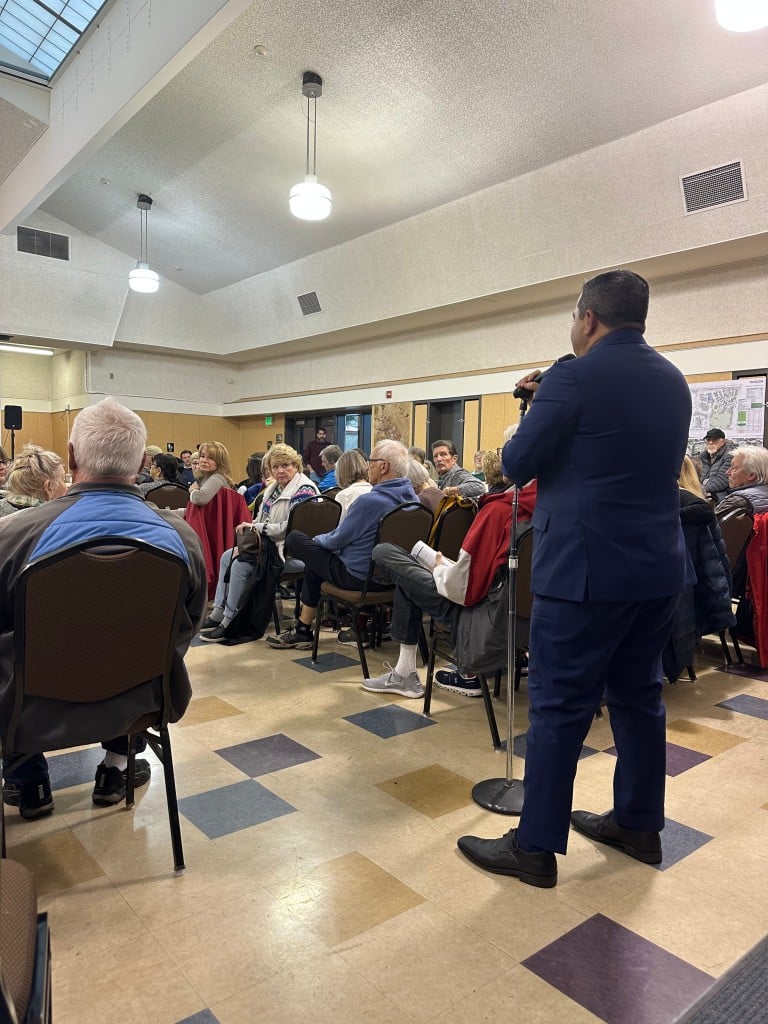
While Chef Thomas Keller did attend and sit in on a portion of the meeting, he did not comment or speak. French Laundry General Manager Michael Minnillo, representing the Thomas Keller Restaurant Group (TKRG), stated at the start of his comments and questions that at no point has their business ever been against the development of workforce housing.
“We’ve been trying to get affordable workforce housing,” said Minnillo, who moved to Yountville more than 20 years ago. “As long as I’ve been here, it’s one of the biggest challenges” to get people who work for them to live close to where they work, he said, adding that TKRG employees in Yountville commute from as far away as Vacaville, Sebastopol and Oakland.
One local business manager suggested that four key questions should have guided the project from the beginning: Who is the customer? What product is needed? What can they afford? And how can it be delivered in a way that meets both business and town goals? The comment framed the housing effort as a business decision requiring clear market alignment, which has not been proved at this point.
Town Council comments
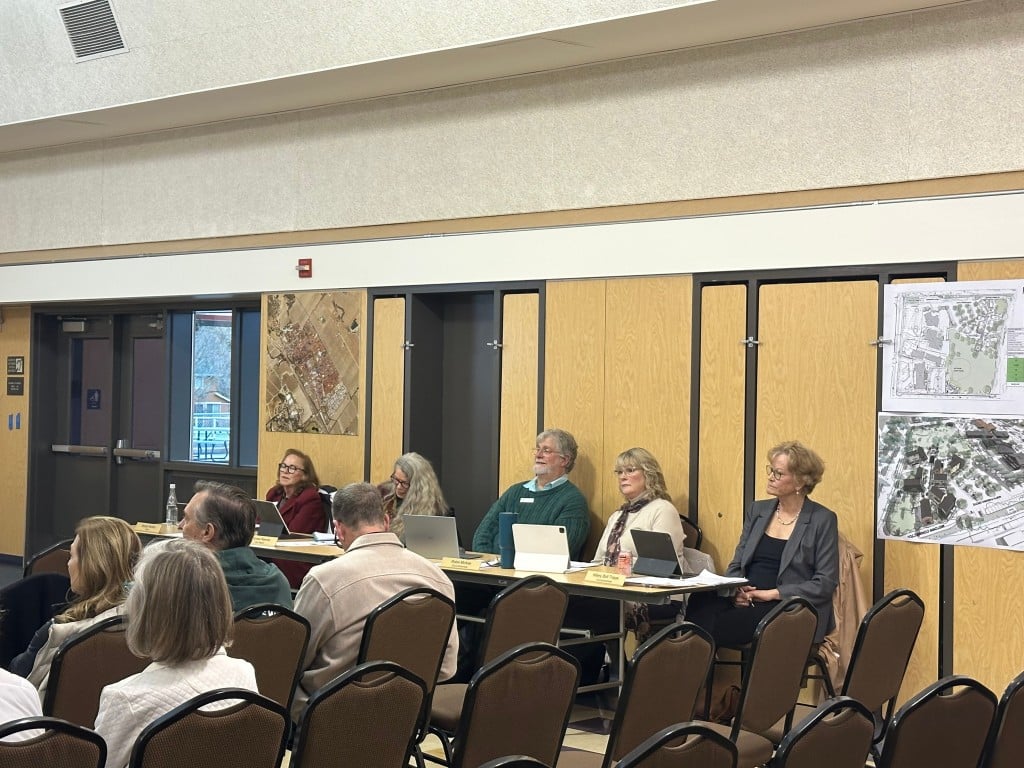
At the end of the meeting, Yountville Town Council members commented. Council Member Hillery Trippe noted that this was the first opportunity for council members to review the project “pro forma” and directly question representatives from BAE Urban Economics and KNN Public Finance. Trippe also questioned the ability that council members have to communicate with these consultants outside of public meetings in order to gather further information.
Trippe requested that the financial models be stress-tested, noting that the current margins appear tight and that a 10–20% fluctuation in key assumptions could significantly affect project feasibility.
Councilmember Robin McKee asked a local business manager whether the lack of affordable housing is a serious problem; the answer was an unequivocal yes. McKee also referenced the BAE report’s finding that the average Yountville worker is 42 years old, suggesting that many potential tenants likely already own furniture. She questioned whether all units need to include specialized built-in furnishing systems, which add approximately $30,000 per unit to construction costs.
Next steps
There will be a Town Council meeting on March 3 at 3 p.m., although the Commons project may not be on the agenda. However, the public is welcome to speak during the beginning of the meeting during the public comment section of the agenda.
The next scheduled time the Commons will be on the agenda is at the Tuesday, March 17, Town Council meeting at 3 p.m. Additional materials may be presented at that time, potentially including a business plan and results from an employer survey or employee focus group. At that meeting, the council will be asked to provide direction on how to proceed. A formal decision point is expected in April or May.
Following the meeting, which lasted more than three hours, Mayor Mohler said, “Our goal was to openly review the data, understand the financial realities and hear directly from the public. This study session was as much about listening as it was about analysis. That transparency, both in sharing information and listening to community perspectives, is essential when dealing with a complex issue like workforce housing, and it will continue to guide the council’s approach.”