From the Napa Valley to Ukraine: How poetry, war and translation make connections
A story that stretches across continents will unfold through poetry, language and memory next week in Yountville.
Dr. Amelia Glaser, a former Yountville Elementary School and Vintage High School student turned scholar of Eastern European literature, will return to her hometown next week to share what she has learned translating Ukrainian poetry during wartime and why those words matter far beyond the front lines.
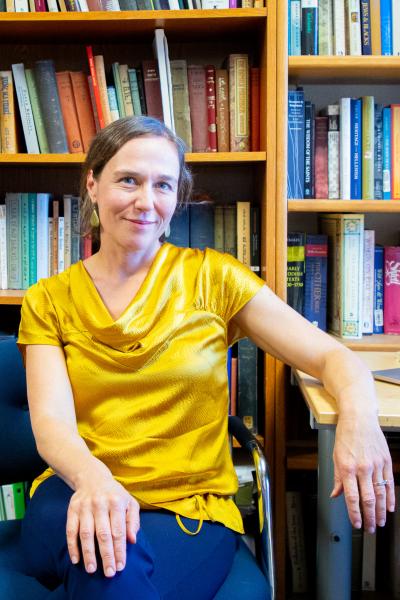
The free program, “Translating Poetry in a Time of War: An Aid Kit of War Songs,” will be held on Thursday, April 16, from 5:30 to 7:30 p.m. at the Yountville Community Center, hosted by the Yountville Library and Napa Valley to Ukraine. Glaser will speak, and attendees will have the opportunity to sample Ukrainian food prepared by Natalia’s Dacha and taste Lost Valley Wines with Ivan Burdinskyi, a Ukrainian winemaker who fled occupied Crimea.
For Glaser, the evening is more than a lecture. It is a homecoming and a continuation of a deeply personal journey that began in Napa Valley classrooms and now extends to conversations with poets in Kyiv cafés and, at times, bomb shelters.
“I’ll be talking about how Ukrainian poets have helped redefine the direction of their country and their relationship to the rest of the world,” Glaser said. “On what we learn by paying close attention to the poetry of a people in transformation. As a translator and scholar of Ukrainian literature, I’ve observed how Ukrainians have thought about language, history and their Russian neighbors since the fall of the Soviet Union.”
Glaser grew up in Yountville before pursuing a path that would take her into the study of Ukrainian, Yiddish and Russian literature. Today, she is a professor at UC San Diego and founder of its Translation and Poetry program, which brings the art of translation into K–12 classrooms.
Her early influences were close to home. “I had some great teachers and librarians who motivated me and others to read and write from a young age,” she recalled, citing educators who encouraged students to see themselves as people with something to say.
At Yountville Elementary School Bonnie Broxton was her fifth grade teacher. “She was a powerhouse and encouraged us to enter all the speech and writing contests, to see ourselves as people with something to say. I think Bonnie had a strong influence on many of us at Yountville Elementary School,” Glaser said, admitting that she was a disorganized student whose teachers managed to combine patience and strictness to coax her into a more mature direction.
Her late father, John Glaser, served for several years as the superintendent of the Napa Valley Unified School District after working as a principal in the district, Her mother, Carol Glaser, who still lives in Napa, co-founded Napa’s Sunrise Montessori School and later taught in the public schools in Napa. Both of her parents, in addition to their work with the Napa schools, worked as consultants for many years, primarily with other West Coast school districts and public sector groups.
Having parents as educators also shaped her worldview. Their focus on collaboration and community continues to inspire her work, particularly the collaborative nature of translating poetry across languages and cultures.
That work has taken on new urgency since Russia’s full-scale invasion of Ukraine in 2022.
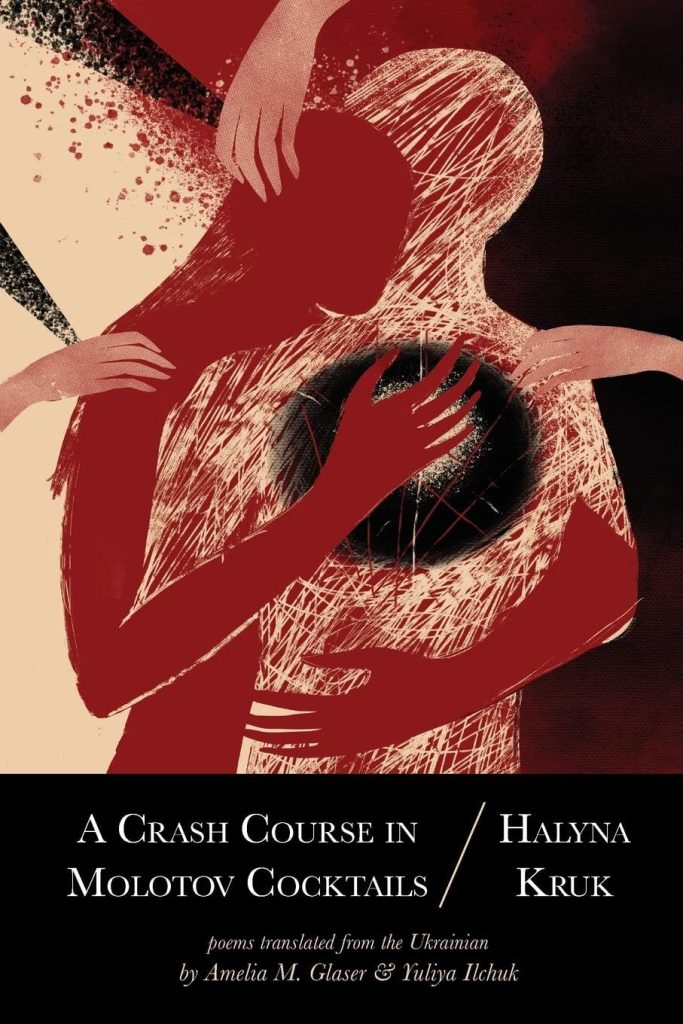
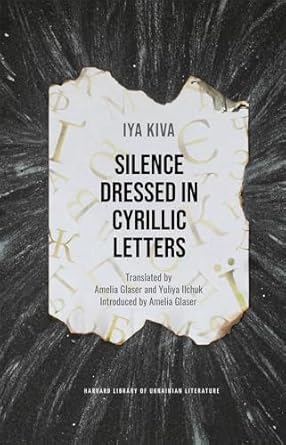
Ukraine, Glaser explains, is “a nation of poets,” a place where literature has long served as a vessel for identity, especially during periods when political sovereignty was uncertain or threatened.
“What I’ve seen, however, over the past 12 years, and especially since the 2022 full-scale invasion, has been an explosion of new poetry coming out of Ukraine,” she said, “Ukraine’s tradition of reading poetry meant that there was a hunger for putting this experience of war into words.”
For many Ukrainians, poetry has become both chronicle and catharsis, documenting not just events, but emotions: fear, resilience, grief and hope.
Glaser has translated multiple collections of contemporary Ukrainian poetry, including works by Halyna Kruk, Iya Kiva and Yaryna Chornohuz, a 30-year-old soldier and drone pilot whose writing reflects life on the front. “These are remarkable artists,” Glaser said.
Her work has helped bring these voices to global audiences, with translations now appearing in languages and publications worldwide.
Since the invasion, Glaser has traveled to Ukraine three times, navigating a long journey through neighboring countries to reach Kyiv, where daily life continues under the shadow of air-raid sirens.
“The biggest adjustment is the constant sirens and trips to bomb shelters,” she said. “Most Ukrainians don’t flinch anymore. I still do.” Yet amid the danger, she describes a city that remains vibrant, filled with cafes, bookstores and creative energy.
Her visits are driven by a simple goal: to listen. “I spend most of my time meeting with poets, talking about their work, their lives,” she said. “They’re experiencing something the rest of the world needs to hear about.”
Those conversations, she believes, underscore the essential role of poetry in times of crisis. “Poetry serves as a chronicle of events, but not only of history,” she said, “it serves as a chronicle of emotions. I believe that in some ways, reading poetry can make us more empathetic humans.”
The April 16 event is also rooted in local efforts to support Ukraine.
Napa Valley to Ukraine, a grassroots organization formed in the early days of the invasion, has worked to provide aid, advocacy and support for Ukrainian refugees and newcomers in the region. The program aims to keep the community engaged through cultural exchange as well as humanitarian action.
Attendees will have opportunities to contribute, including donations for medical supplies such as tourniquets, a $15 item that can save a life. Organizers hope the evening will be both informative and uplifting.
“Ukrainian poetry is accessible, enjoyable word play,” said Debbie Alter-Starr, a co-founder of Napa to Ukraine. “I expect people will come away feeling uplifted as part of the experience despite how the topic may sound heavy. Attending a program like this with Ukrainians, partaking in their culture, food and wine, with caring neighbors is heart-raising.”
For Glaser, the hope is simple: that those who attend will leave with a deeper appreciation of both Ukraine and the role of art in shaping how we see the world.
And perhaps, she concluded, with a renewed curiosity about language itself, noting that if someone walks away wanting to read more poetry — or even try translating it — that would be a wonderful outcome.
“Translating Poetry in a Time of War: An Aid Kit of War Songs,” a free talk by Dr. Amelia Glaser, is set for Thursday, April 16 from 5:30 to 7:30 p.m. at the Yountville Community Center, 6516 Washington St., in Yountville. The event is hosted by the Napa County libraries and Napa Valley to Ukraine and books of poetry that Glaser translated will be available for purchase from Napa Bookmine. For more information visit https://events.napalibrary.org/event/16005083.