Healthy soil deserves more than a day of celebration
Why should we celebrate World Soil Day? More importantly, why should we celebrate soil?
Soil is more than the ground beneath our feet. When it’s healthy, it’s a vital ingredient that feeds the plants and livestock that feed us. That fact is especially important in California. Our state produces nearly half the vegetables commercially grown in this country. In addition, soil nourishes the non-edible plants that provide habitat for wildlife.

Maybe a little historical perspective would be helpful. During the Dust Bowl years of the 1930s in the U.S., severe dust storms removed topsoil from land that had been depleted by drought and poor farming practices. According to the History website, an estimated 35 million acres of farmland lost enough topsoil to become useless for farming, while another 125 million acres—about three-quarters the size of Texas—were on track for a similar fate.
The USDA helped reverse this trend by promoting soil conservation and sustainable farming methods, but the economic and human hardship were severe. President Franklin D. Roosevelt declared in 1937, “The nation that destroys its soil destroys itself.”
Research and changes in farming have been helpful, but not enough to adequately protect this invaluable resource. Human activity has aggravated the problem. Today we’re losing topsoil faster than we’re gaining it.
It’s difficult to determine the annual global loss; however, recent studies suggest that previous estimates of loss are too low.
We can’t allow this decline to continue. We not only need to retain topsoil, we also need to improve soil health. Healthy soil is more productive, and healthy soil combats climate change.
If we can increase carbon retention in soil, the climate will benefit. That’s why carbon sequestration is part of global efforts to fight climate change.
The goal of the international “4 per 1000” initiative, launched at the 2015 Paris Climate Conference, is to increase soil organic carbon globally by 0.4% annually to significantly offset human-caused carbon dioxide emissions.With these efforts to improve soil health and soil carbon retention, we could offset 20 to 35 percent of the greenhouse gas emissions due to human activity.
World Soil Day is Saturday, Dec. 5. But we should be celebrating healthy soil and its potential to mitigate the effects of climate change not just once a year, but every day of the year.
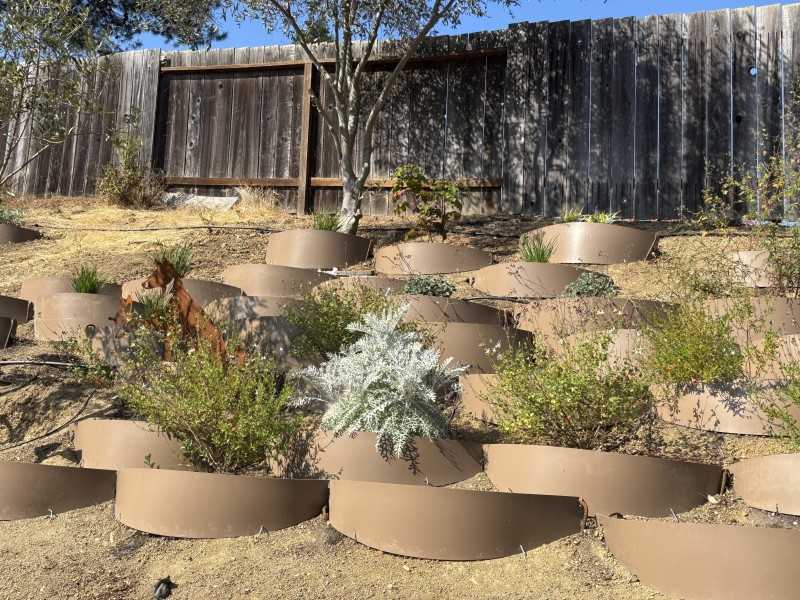
The Master Gardeners of Napa County’s Soil and Climate Change Committee promotes this attitude. We are trained volunteers who provide research-based garden advice to the public for free. Members of the Soil and Climate Change Committee are enthusiastic about advising our neighbors on how to cover bare soil with plants, leading to more carbon in the soil; how to eliminate so-called “heat islands” such as rock-mulched gardens and artificial lawns; and how to convert lawns to plant-filled gardens. We can help you improve your soil and, maybe, inspire you to transform your landscape into a climate change fighter.
Regardless of the current state of your garden, take a moment to celebrate your soil, either with a Napa Valley-style wine toast or, better yet, some nourishing compost tea for your vegetable beds.
Library Talk: Join UC Master Gardeners of Napa County and Napa Public Library for a free talk on “Fruit Tree Fundamentals” on Thursday, Jan. 7, from 7 to 8 p.m. via Zoom. Get tips for choosing, planting and maintaining home fruit trees, plus reliable resources to answer further questions and solve problems. Register to receive the Zoom link.
Help Desk: The Master Gardener Help Desk is available to answer your garden questions. Use our online Plant Problem Help Form or email us at mastergardeners@countyofnapa.org. Include your name, address, phone number and a brief description of the problem. You can also visit us in person on Mondays and Fridays from 10 a.m. until 1 p.m. at the University of California Cooperative Extension Office, 1710 Soscol Ave., Suite 4, Napa.