
The Loose Cannon: Relics of the Napa Valley – windmills and tankhouses tell stories

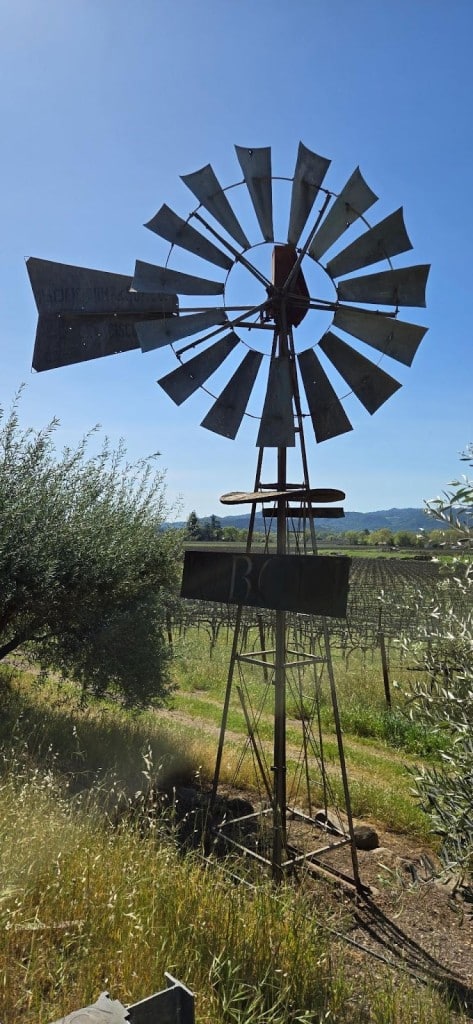
I’m pleased that this relic from the past has survived and is still standing in the 6700 block of Yount Street today:
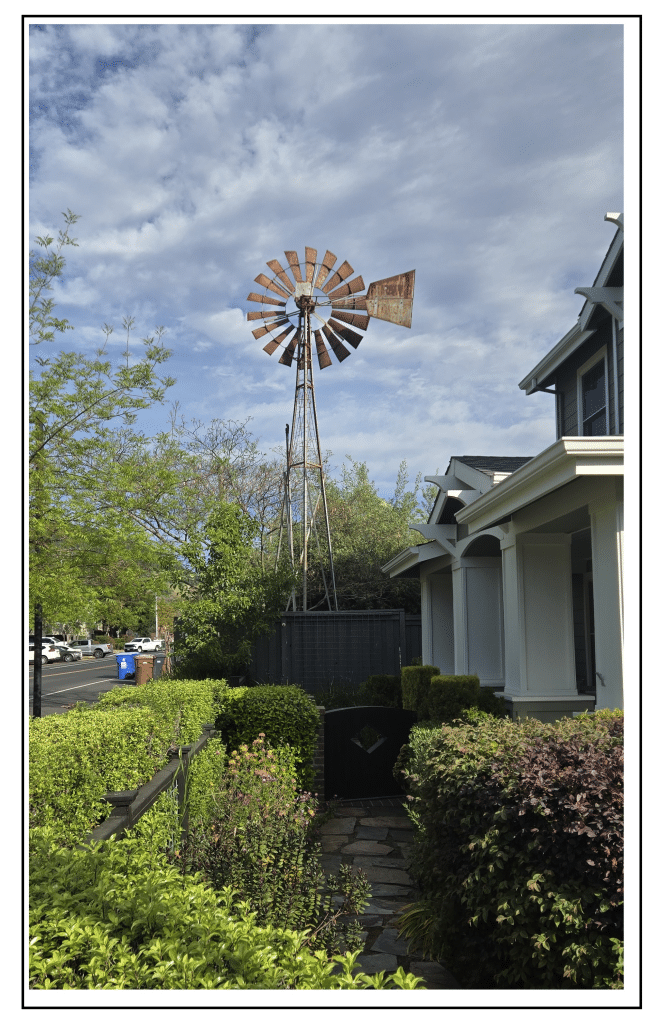
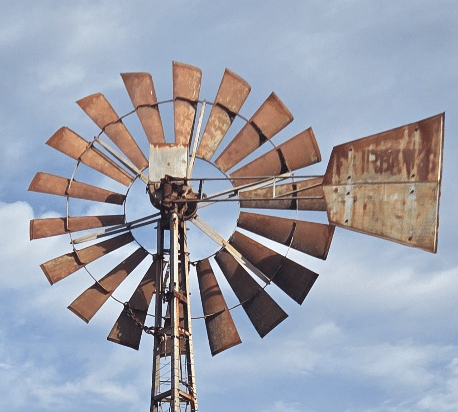
That is a Fairbanks-Morse windmill built to pump water. Originally developed in the 1800s, windmills of this nature were quite common prior to the availability of electricity and gas engines.
When the wheel (rotor) turned, the circular motion was converted to an up and down motion by the use of a crankshaft and a connecting rod connected to a vertical rod. That rod went down to power a pump at the wellhead (picture below). The tail vane is the part you see extending to the right of the rotor. When in operation, the tail vane would be perpendicular to the rotation of the rotor, to keep the rotor facing into the wind. That kept the windmill operating efficiently. But in extremely high winds, it was necessary to allow the tail vane to break loose and fold back in line with the rotor, to avoid damaging the windmill. And that is what you see in the picture above. That was not the position of the tail vane when it was in operation.
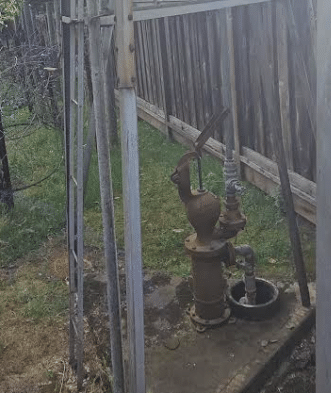
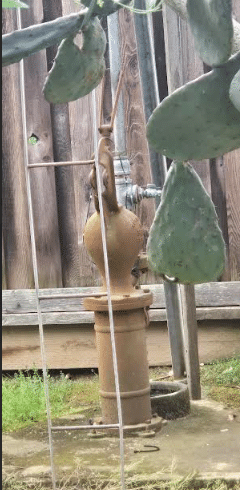
Above is the pump at the wellhead, so we know that was the original location of the well, not like the following windmill:
This windmill was on my grandfather’s property on the Silverado Trail, east of Rutherford. It was moved from a lower location in the field and now stands right next to the Silverado Trail for ornamental purposes only.
Windmills connected to pumps brought water to the surface. That was the first part of the process. Once brought to the surface, the water needed to be stored for use. For some applications, the water could simply be run directly into a livestock watering tank sitting at ground level in the middle of nowhere.
But when that water was to be stored for home use, it was usually stored in an elevated tank. The structure holding the tank was a water tower, or a tankhouse. A tankhouse is just a water tower where the tank is enclosed by siding.
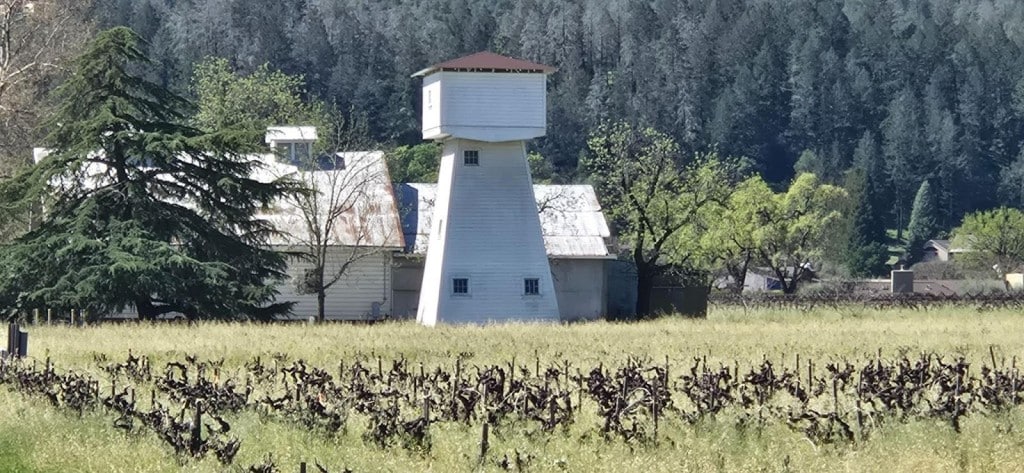
I believe this to be the most photographed tankhouse in the Napa Valley. It has appeared on lots of calendars. Google it for better quality pictures. It is west of Highway 29 just south of West Zinfandel Lane. The water tank would sit in that top box section.
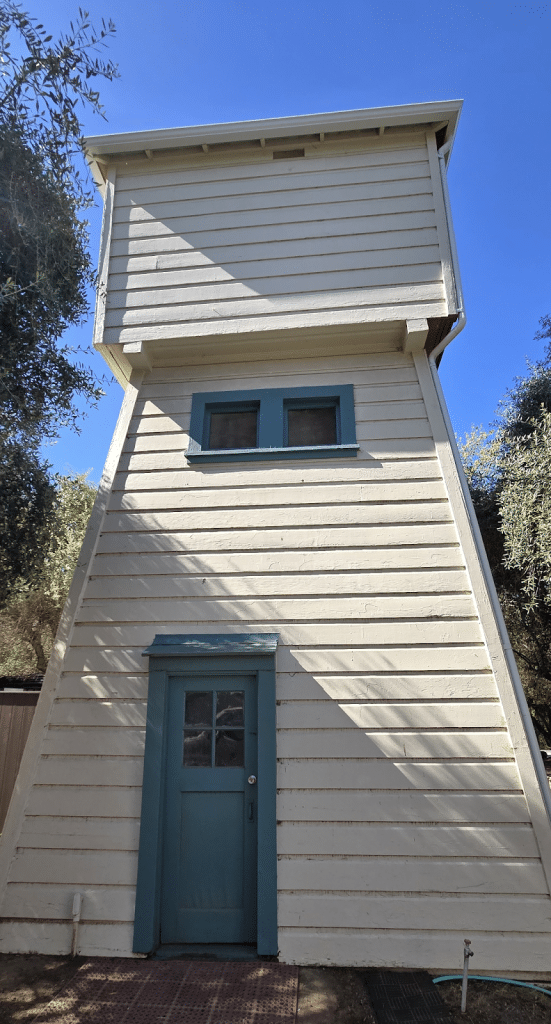
This is the tankhouse where I grew up on the current Plumpjack Winery property.
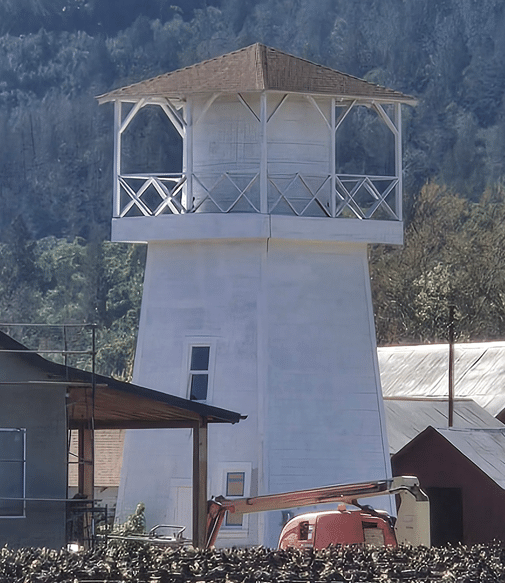
This picture shows a tank on the top of a water tower that is not enclosed with walls.
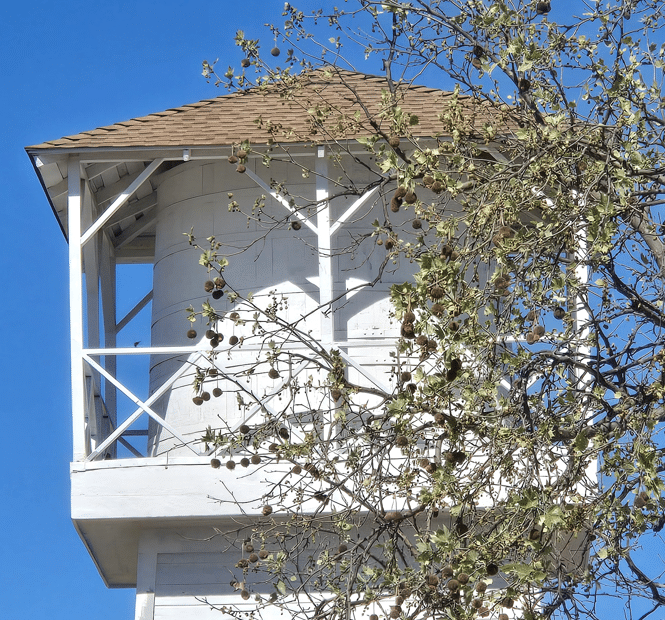
It is visible west of Highway 29 in the Rutherford area.
From Wikipedia:
History: Tankhouses are an important part of California’s historical heritage and the state’s early material culture. Many thousands were built in both town and country from the 1850s to the 1930s, almost exclusively of redwood — tower, water tank, siding and roof shingles — at a time when the state’s abundant redwood forests seemed inexhaustible. The windmill, which stood over the well, was usually attached to the tower, but sometimes stood on a separate tower. Tankhouses became obsolete with the coming of deep, drilled wells and electric pumps in the countryside and water mains in the towns. Almost all of the hand-dug wells have been filled in now, and most of the windmills have disappeared. The remaining tankhouses are an endangered species, threatened by constant commercial, residential, industrial and agricultural development. Their numbers dwindle with each passing year,[1] and of those that remain, many suffer from lack of maintenance.
Geographic distribution: There are far more tankhouses in California than in any other state, and they most probably originated in California. A tankhouse was built in Mendocino, California, in 1857[2] and many tankhouses in a variety of designs are still standing in that village.
What’s With All the Water Towers? – Kelley House Museum – Mendocino, CA
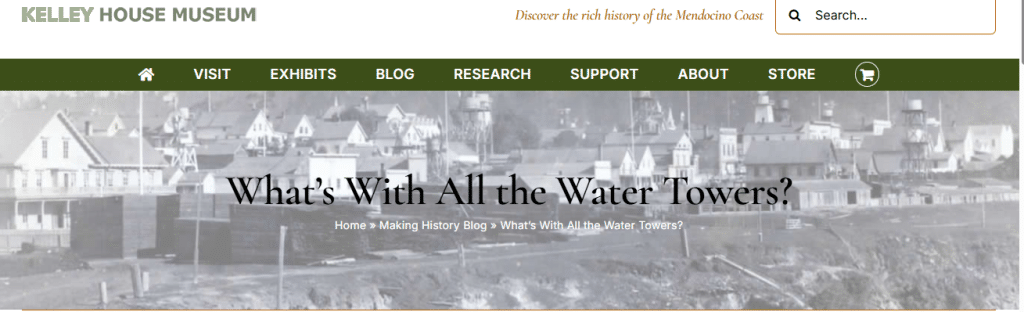
If you look closely at the above picture, you can see many water towers, with the tanks not enclosed by walls.
Most of those water towers are no longer standing, and many of the existing ones have been converted for other purposes.
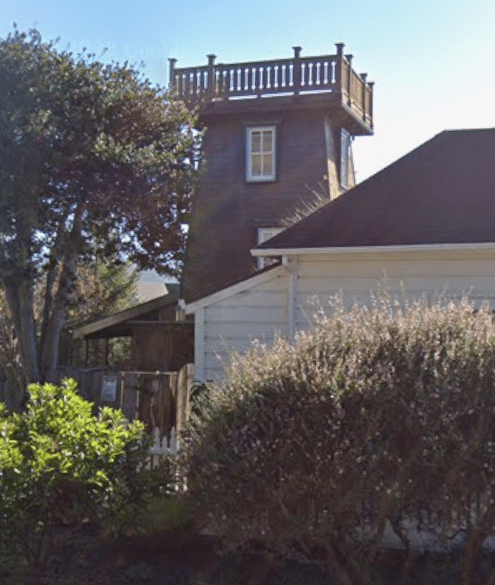
Lin and I stayed in this converted water tower in Mendocino. Obviously, the water tank has been removed. The view of Mendocino from that top platform is incredible!
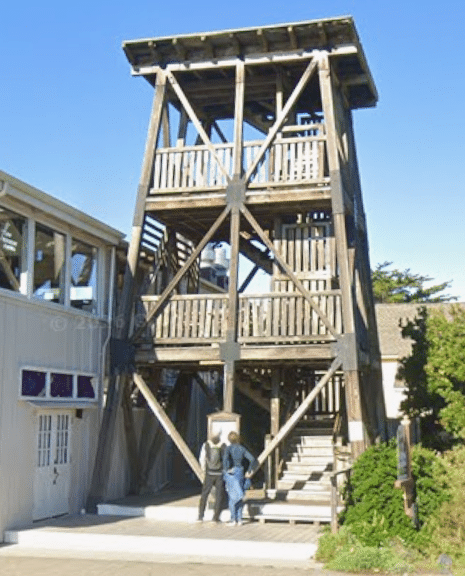
This water tower is on Mendocino’s main drag. Those stairways lead up to the restaurant on the left. That is the largest water tower that I am aware of.
But even that prominent and striking structure is facing demolition:
The caption to a similar picture on that website reads:
The water tower that serves as the entrance to Flow Restaurant and Lounge in Mendocino, Calif. on Friday, July 4, 2025. Built in 1904 and reconstructed in the ‘70s, the tower is at the center of a legal battle over its planned demolition, with some community members calling it historically significant and others citing safety concerns. (Mandela Linder via Bay City News)
From this website:
Mendocino to Run Out of Water Towers • Scott Roat Realty
“Imagine Paris without the Eiffel Tower, San Francisco without its cable cars – that’s Mendocino without its iconic water towers. These towering sentinels, woven into the very fabric of our coastal town, are now under threat. This is an urgent matter!”
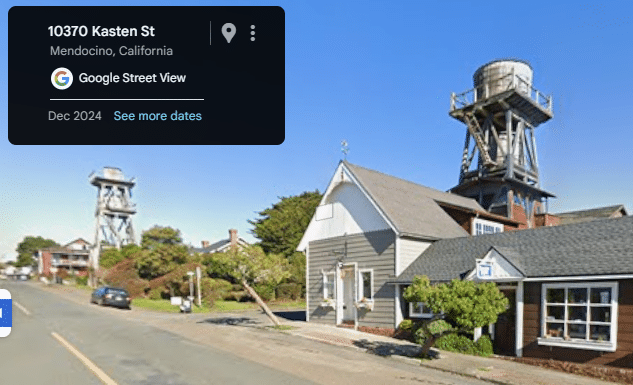
The above screenshot from Google Maps shows two unique water towers with two tanks.
The basic structure of all those water towers have something in common which makes them so distinguishable from other structures.
The base dimensions of the structure are much larger than the level that held the tank, and the sides are sloped.
Why were they shaped like that? Well, I have an unconfirmed theory that’s pretty darn basic.
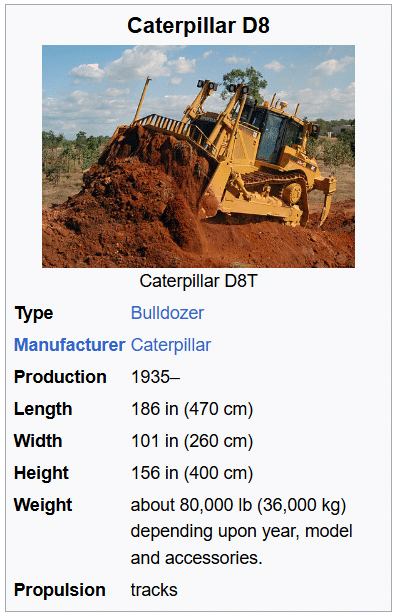
A tank that is 12 feet in diameter and 12 feet high can hold 10,000 gallons of water. Water weighs 8.34 pounds per gallon. So, that water filled tank would weigh over 80,000 pounds – over 40 tons. That’s about the weight of a CAT D8 Bulldozer.
From Wikipedia:
That is a lot of weight to support at the top of maybe a 30 or 40 foot tall structure even before factoring in the rocking motion of earthquakes. So, the buildings were designed for strength and rigidity before the days of plywood. Plywood provides incredibly strong rigidity and resistance to earthquakes.
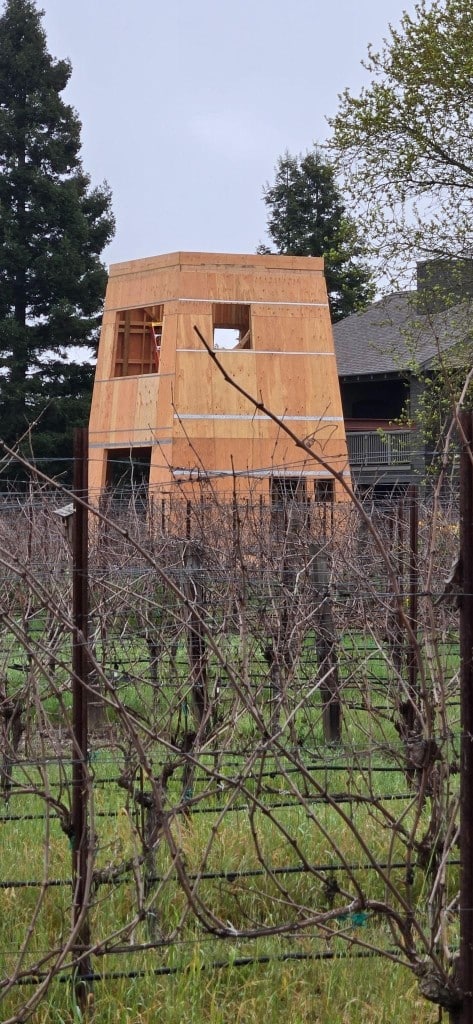
I noticed this building with plywood sheathing going up on the east side of Highway 29 near Bistro Don Giovanni. Looks like it will resemble a tankhouse, but I doubt it will have a water tank when done. You can keep an eye on it with me.
Lin and I went for a Sunday ride to photograph tankhouses, and I was surprised by how many we could find when really looking for them.
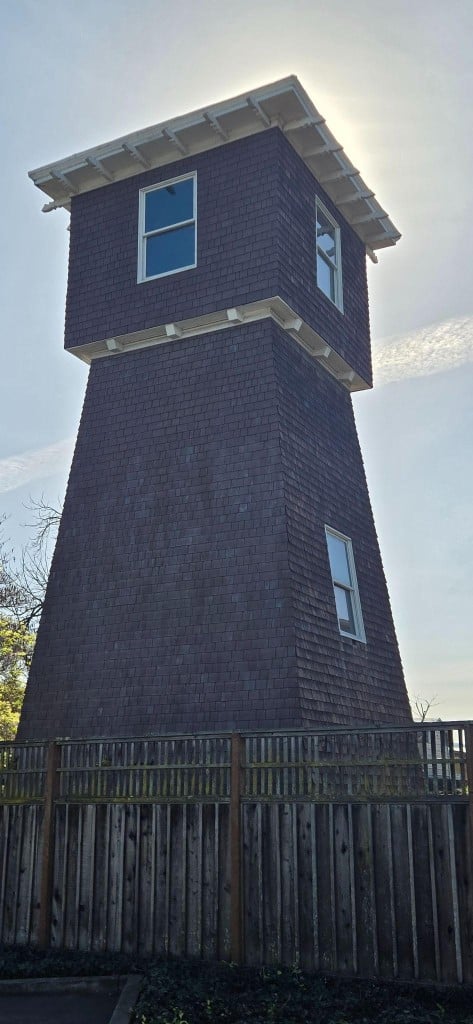
This one is right on Lincoln Avenue in Napa.
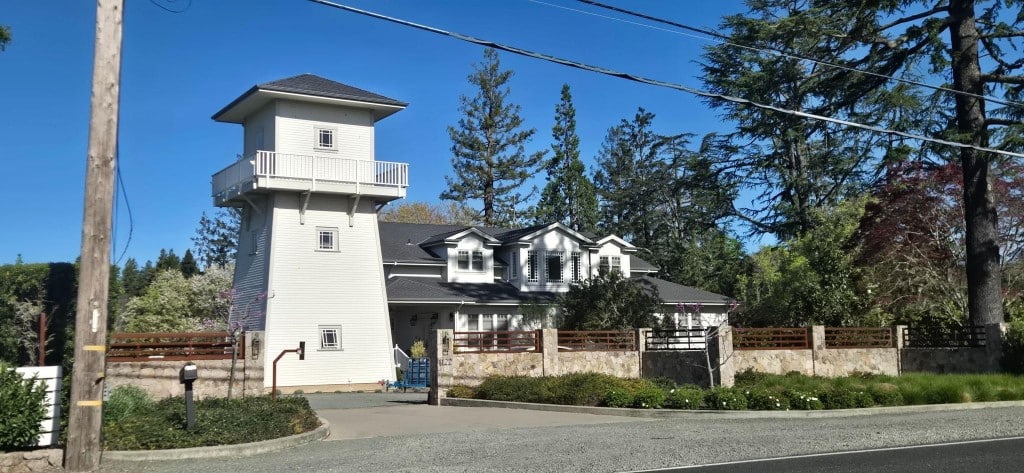
This beautifully restored tankhouse is right on Monticello Road.
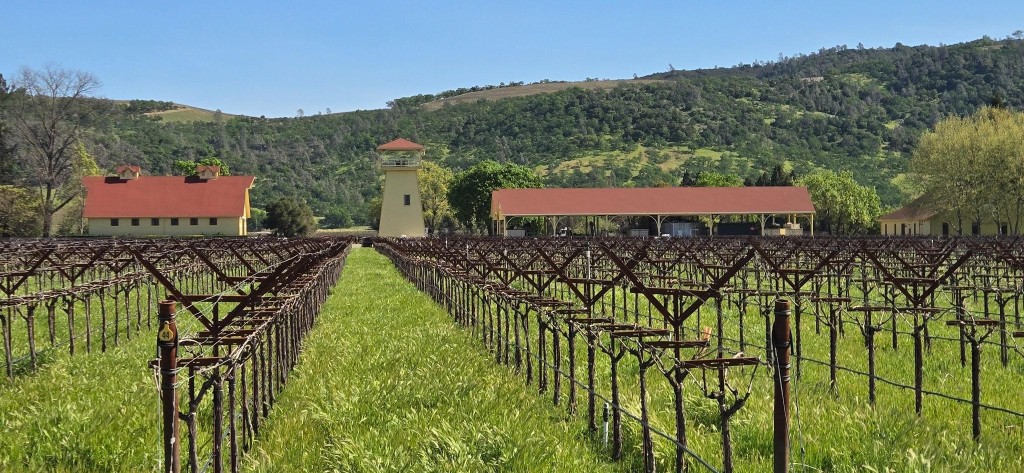
Beckstoffer Vineyards off of Conn Creek Road
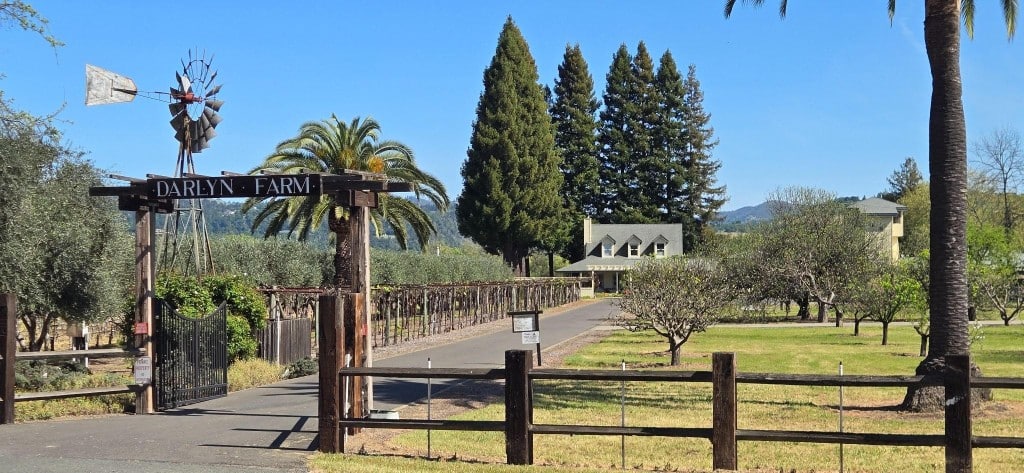
This farm north of Rutherford has both a windmill and a tankhouse.

I wonder how many people have bought Silver Oak wine without knowing what the building on the label was, or that there really aren’t Silver Oak trees.
Anyway, let’s hope Yountville’s (only?) windmill stands tall forever!
Editor’s note: After submitting this story, Ranndy inquired about the standing windmill in the 6700 block of Yount Street. Incidentally, that property is currently on the market. Yes, that means that you too could own a piece of history and perhaps Yountville’s only remaining windmill. Lisa Duff Khajavi, the daughter of the Duff family that owned the property for decades, was referred to us at the Sun. Hopefully a future Loose Cannon column will include some of the interesting history of this property that she kindly shared.
Ranndy Piña
[email protected]
Sponsored
Author