New town manager approved at Town Council meeting
Before another full-capacity audience, Yountville Town Council reconvened on Sept. 15, following the summer legislative break.
The approval of a new town manager, affordable housing and economic development dominated the packed agenda, along with renewed questions about former Town Manager Brad Raulston’s severance agreement.
Opening public comments
The meeting opened with public comments, which included questions from residents.
Yountville resident Jill Turner returned to the topic of the severance package given to Brad Raulston because she still felt that the questions she posed at the August Town Council meeting had not been sufficiently answered. She said that simply responding, “This is what other towns do,” was irrelevant, and that keeping the facts behind the privacy statement in the press release was disingenuous.
Turner, a candidate for the town council in the November election, said the privacy provision in the contract regarding a severance package applied only if Raulston was terminated by the council, not if he resigned. She again posed her questions:
“First, if Mr. Raulston resigned voluntarily, why was he granted severance at all? What was the legal or policy basis for that decision?
“What is the total cost of this resignation agreement, including salary, benefits, accrued vacation and any other compensation?
“Were the circumstances different than what the public was told? If so, why?”
She concluded, “The people of Yountville deserve a clear explanation of how this decision was made and why it is in the town’s best interest. We, the taxpayers, deserve an answer as to how our money was spent.”
Joe Tagliaboschi, who is running for mayor, reiterated Turner’s questions, noting that both the former town manager and the Town Council had stated that Raulston voluntarily resigned. If that was the case, Tagliaboschi said, then a severance package was not required under his contract, and the information would therefore not be protected.
Mayor Margie Mohler asked Town Attorney Gary Bell to respond. Reversing his position from the last town council meeting, Bell said, “I think that staff is going to provide a further response if we could have some time to circle back on that.”
Resident Ashley Tenscher brought information to the podium about two apartment buildings currently on the market, noting that their availability could present an opportunity for the town to acquire them and place them in the deed-restricted, low-income rental market for the workforce.
The property at 6778 Yount St. consists of eight two-bedroom apartments, each with two parking spaces. The asking price works out to approximately $310,000 per unit.
Tenscher also noted that 1925-1949 Mulberry St. is another apartment property currently for sale. It has 12 studio apartments and one one-bedroom apartment, along with 15 parking spaces, working out to approximately $270,000 per unit.
She asked the council to consider purchasing the properties using Measure S funds.
Finance Director Celia King stated that there is approximately $500,000 in the Measure S fund.
Interim Town Manager Ken MacNab said the town was aware that the properties were available and is considering its options.
Former Yountville Mayor John Dunbar thanked the council and town for continuing to support the September 11 memorial in the Community Center Plaza. He noted that the memorial now has a new bronze plaque that will better withstand the elements.
New Town Manager Hired
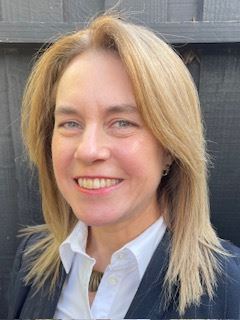
MacNab announced that Ralph Andersen & Associates, the recruitment firm retained, received 42 applications for the town manager position. The list was narrowed to 25 and from that list the council choose to interview six candidates. From there, they reinterviewed the top two candidates and then unanimously selected, and in this meeting approved, the hiring of Heather Abrams.
Abrams has been town manager of Fairfax since 2022, leading municipal operations serving approximately 7,500 residents and managing a $22 million annual operating and capital improvement budget.
Heather Abrams. Submitted photo
She holds a Master of Business Administration from California State University, Monterey Bay, and a bachelor’s degree from the University of California, Berkeley. She also holds an executive certificate in public leadership from the Harvard Kennedy School and is an ICMA credentialed manager.
Details of Abrams’ contract were made public over the past week in a town press release and Yountville Sun news flash.
The town will be scheduling meet-and-greet sessions with Abrams, to be announced at a later date. MacNab’s last day was Sept. 16, according to his agreement. Public Works Director John Ferons will step in as interim town manager until Abrams begins work on Oct. 19.
Affordable Housing – From Vision to Delivery
Burbank Housing Chief Real Estate Development Officer Jocelyn Liu outlined how the process could work if the town partnered with the organization to develop affordable housing in Yountville.
Her detailed presentation demonstrated how a project could move from site selection to leasing, typically over the span of approximately seven years.
Burbank Housing has 40 years of experience developing affordable housing in Northern California. Liu explained that Burbank has a team of experts at each stage of development who work together to move projects forward.
Obtaining financing is the biggest and most important step because it drives many aspects of the project. There are generally three sources of funding: local funding, either from the town itself, grants from the county or state and tax credits. Each funding source has different requirements for factors such as Area Median Income (AMI) and unit mix. As a result, the size of the units and the overall size of a project tend to be determined by the amount and type of funding that can be secured.
Many of the points Liu presented, along with the questions asked by council members, highlighted differences between how an affordable housing project is planned and built by a nonprofit organization and how the Commons project had been presented to the town before the referendum halted it.
Burbank Housing uses financial models, as required by its funding sources, to project the possibilities under the specific circumstances of each development. The organization can draw on its experience managing existing projects to estimate operating costs.
The process is handled largely in-house, from identifying funding sources and securing tax credits to the design and construction process. This allows Burbank to continually evaluate a project’s feasibility before moving on to the next stage.
Burbank also has a property management team to manage the housing after it is leased, along with a compliance team and on-site managers. Those costs are incorporated into the project’s operating budget.
Liu explained that Burbank has flexibility to work within a community’s master plan. If the town retains ownership of the land and leases it to the nonprofit, the town can retain control over the terms of the development. There are several options for either leasing or selling land to a nonprofit, but the main point is that there is flexibility for the town and developer to work together on an affordable housing project in Yountville.
The Burbank Housing Presentation that was shared is available online here.
Dunbar reminded council members that the town has been through a similar process before, when it successfully worked with Napa Valley Community Housing (NVCH) to develop the Arroyo Grande housing on Finnell Road. The land was donated by the Bardessono family. NVCH developed the project, which is now managed by Burbank Housing.
Erica Sklar, CEO of Napa Valley Community Housing, also pointed to Arroyo Grande as an example of a property that works well for Yountville. She noted that the development has 25 units, ranging from 550 square feet for a studio to 1,000 square feet for a three-bedroom apartment.
Economic Development – Yountville Portfolio Initiative
Yountville Deputy Director, Marketing & Economic Development Beverly Whitmore presented an Economic Development Update Business Report focused on the success and future of the Yountville Portfolio, noting that the first iteration was successful.
The Yountville Portfolio is an initiative that was designed to unite businesses in town to create a destination for larger scale meetings, events and gatherings. The goal is to attract corporate executive, C-suite and incentive meeting planners, while balancing the needs of both local businesses and residents.
The Liquidity Summit, presented by All-In, was a four-day, sold-out event held throughout town from May 31 through June 3. The event created an influx of visitors and generated record Transient Occupancy Tax revenue for the town for both May and June 2026.
The program resulted in 866 room nights booked in Yountville, with an additional 570 room nights booked in Napa. Sales tax revenue also dramatically increased during that period. The Liquidity Summit has agreed to return, with the next local event set for May 23 – 26, 2027.
Imagine Yountville Grant Program
Parks and Recreation Director Samantha Holland provided an update on the Imagine Yountville Grant process. To make the program more accessible and encourage more applications, there will be two levels of grants: small grants from $250 to $2,500 and large grants from $2,500 to $20,000.
An informational meeting will be held on Sept. 23 at 5:30 p.m. at the Community Center to answer questions for anyone with a small or large idea for making Yountville a better place to be.
Neighborhood Outdoor Art Program
A new idea from the Yountville Arts Commission was presented by Holland and Yountville Arts Commission Chair Ronda Schaer.
They asked the council to approve a new program that would allow the town to purchase sculptures that had been on display in town that residents determined were too good to let go, using funds received from Art Walk sculpture sales and place them in neighborhood parks for residents to enjoy.
Schaer offered the sculpture of the girl and the dog, Who Rescued Who, as an example of a favorite and well-loved sculpture that residents would have liked to see the town purchase and place in a park rather than lose it when its two-year loan agreement expired. She noted that Yountville’s parks offer many options for sculpture placement.
The town would purchase and then own the sculptures, which could then be moved between parks if desired.
Schaer said, “We are not considering this to invite visitors into our neighborhoods, but to treat our residents to art in their neighborhoods.”
The new program was approved by a 5-0 vote.
The video recording of the entire meeting is available online here.