A tiny weed sparks a big lesson in the garden
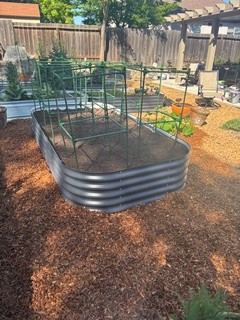
May and June are wonderful months for Napa Valley gardens. The flowers haven’t gone to seed; the weeds haven’t emerged; the tomato plants look promising.
I had an unusually full social calendar in June, so I decided I would be the ambassador for the Good-Enough Garden. This is the garden that is a well-intentioned work in progress. Note: They all are.
I was inspired by Margaret Renkl’s children’s book, The Weedy Garden. It is a child’s-eye view of all the life forms in a more natural, less manicured garden space. Beneficial insects, birds and butterflies add to the vitality of a landscape, and I decided I wouldn’t disturb them.
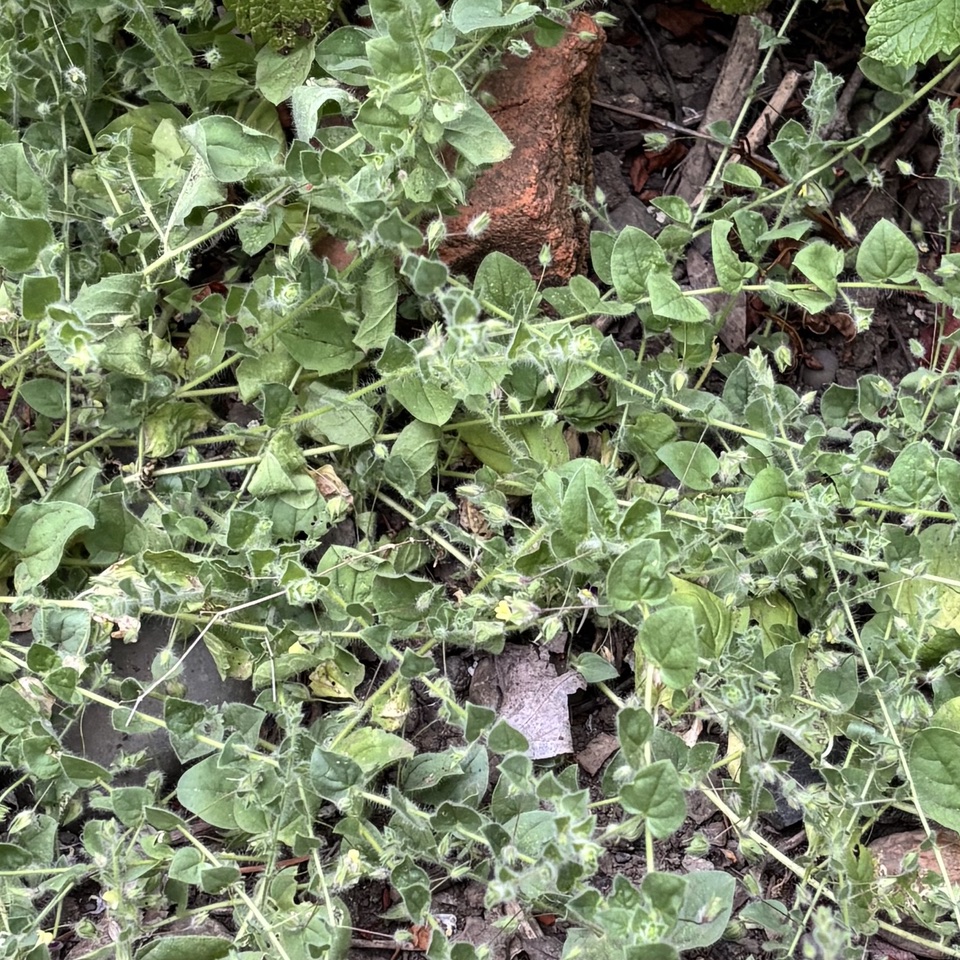
The predictable happened. I walked out on July 1 and saw a new-to-me weed. It had fuzzy, rounded leaves, with tiny bell-shaped flowers rather like miniature foxgloves. The plant had sent out vines that spread from a central stem. These vines were choking my Jacob Kline bee balm (Monarda didyma).
I had no idea what the aggressor was, but I took a picture with my phone and pulled up the handy iPlant app to identify it. I was the lucky hostess to the round-leafed cancerwort (Kickxia spuria), not to be confused with its near relative, the sharp-leafed cancer wort (Kickxia elatine).
Its alarming sounding name is simple to decipher. “Cancer” means “canker” and “wort” is the Anglo-Saxon name for plant. Long ago people believed that the plant could cure skin irritations, or cankers. “Kickxia” honors two Belgian botanists.
The cancerwort originated in Asia, was carried into Europe (the fuzzy vines could stick to animal fur) and then made is way to North America. Its leaves are simple (not separated into leaflets) and entire (smooth edged). The flower is symmetrical.
Cancerwort is considered an invasive plant. It competes with other plants for nutrients and water. It can crowd out native plants. If it sets seeds, it can multiply rapidly. I remember brushing seeds out of my little dog’s coat. That could be the source of my new invasive plants.
The best way to remove the cancerwort is to dig it out, including the long tap root. I have some work ahead of me. Fortunately, I received a new weeding knife for Christmas. Also, I will wear gloves—the sap from the plant can be a skin irritant.
I had a good time looking up the different invasive plants in Northern California. The government classifies problem plants by their level of peskiness. First, you have the plain weed, then the invasive weed, and finally the noxious weed.
According to the U.S. Department of Land Management, a weed is any plant growing where it is not wanted. It can be native, invasive, noxious or not. The legal definition for a noxious plant is “any plant designated by a federal, state or county government as injurious to public health, agriculture, recreation, wildlife or property.”
Many invasive plants can be controlled. You can plant them in large containers, as some people do with Acanthus. Or you can remove their flowers before they set seed, as with butterfly bush (Buddleia). However, when a plant can escape into the wild and easily expand its territory, that can be a problem.
Pampas grass (Cortaderia selloana) and periwinkle (Vinca major) started out as attractive additions to the home landscape. People bought them at nurseries and had no idea they would escape the bounds of suburban life and take over forestland. French broom (Genista monspessulana) is such a problem at Napa’s Westwood Hills Park that there are regular volunteer gatherings to remove it.
My cancerwort is confined to one flowerbed, so it shouldn’t be too hard to remove. If you have weeds you need to identify, I recommend iPlants, at www.iplants.org.
Workshop: Join UC Master Gardeners of Napa County for a workshop on “Succulents: Out of the Pots, Into the Ground” on Saturday, July 25, from 10 a.m. to noon, at UC Cooperative Extension, 1710 Soscol Ave., Napa. Learn how to design, plant, and maintain a sustainable garden in your own landscape. Register here.
Library talk: Join UC Master Gardeners of Napa County and Napa County Library for a free talk on “Be a Butterfly Angel” on Thursday, Aug. 6, from 7 to 8 p.m. via Zoom. Learn how to help support our declining population of Western Monarch butterflies. Register to receive the Zoom link.
Tree walk: Join UC Master Gardeners of Napa County for a docent-led tree walk through historic Fuller Park in Napa on Friday, Aug. 7, from 10 to 11:30 a.m. Discover some of the many exotic and native trees in this 120-year-old arboretum. Meet at the corner of Oak and Jefferson Streets. Space is limited and registration is required for each participant.
Help Desk: The Master Gardener Help Desk is available to answer your garden questions. Use our online Plant Problem Help Form or email us at [email protected]. Include your name, address, phone number and a brief description of the problem. You can also visit us in person on Mondays and Fridays from 10 a.m. until 1 p.m. at the UC Cooperative Extension Office, 1710 Soscol Ave., Suite 4, Napa.