The Loose Cannon: Yountville’s wildest residents
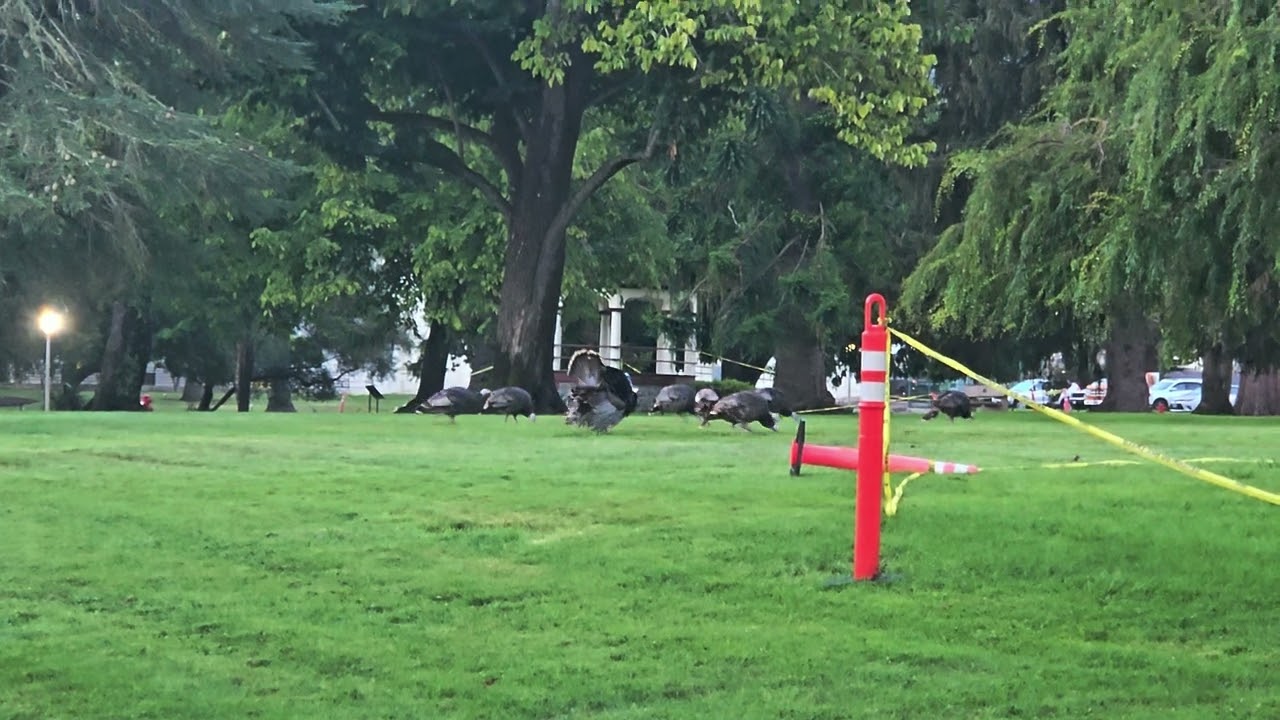
Do you know that there are several gangs of undocumented aliens that have taken up residence at Veterans Home in Yountville? They roam the grounds freely and with impunity.
They are out of control, growing in numbers and nobody seems to care.
This video shows them cavorting near the dining hall:

OK, yes, I may have tried to mislead you. You‘ll get over it.
So how did they get there? You can thank our government.
No, really! They had those aliens shipped into California.
In general, they are known as Meleagris gallopavo. But locally, we have the species Meleagris californica. Therefore, how can I justify calling them aliens?
Well, wild turkeys roamed California 10,000 years ago before becoming extinct.
It wasn’t until 1959 that the California Department of Fish and Game reintroduced wild turkeys (Rio Grande subspecies) from Texas. Alien wild turkeys. Yes, I can say that. I’ve been in the valley longer than they.
To provide a new game species for hunters, farm-raised turkeys were introduced to California in the 1900s, but it seems they weren’t tough enough to survive in the wild. So, it wasn’t until the wild Texas turkeys were brought in that they were able to survive. And they didn’t just survive, they thrived!
The Texas turkeys were tough and fast runners. And to further frustrate their potential predators, they could fly short distances. That allows them to safely roost overnight in trees.
Early last Sunday morning I hiked to the Veterans Home to document their pre-dawn activities. I was feeling like one of those National Geographic wildlife photographers without the helicopters, boats and expensive photographic equipment. Just me and my Samsung S24 cell phone.
I was hiking on the concrete footpath that borders Chandon well before sunup, when I caught some movement to my left in the minimal daylight. I found myself looking at a skunk about 6 feet away with his tail raised and pointing in my direction. As the vets might say, he was “locked & loaded” and I was in his sights. I scooted on past him and breathed a sigh of relief.
This next video shows them roosting in the trees and being quite verbal. Right around 6 a.m. they started exiting the tree and forming groups just below the Dining Hall:
I used to wear a turkey feather in my hiking hat. One day I ran into a fellow hiker who asked, “You do know that is a turkey feather, don’t you?” The implication was why would I want to associate myself with turkeys, rather than maybe a hawk or an eagle.
So how did we end up with the bald eagle as our national bird and not the wild turkey?
From the National Wildlife Federation website:
Eagle vs. Turkey: America’s First Bird Controversy
“On the afternoon of July 4, 1776, just after the signing of the Declaration of Independence, the Continental Congress appointed a committee made up of Thomas Jefferson, John Adams and Benjamin Franklin to select a design for an official national seal.”
At the time, the new nation was still at war with England, and the fierce-looking bird seemed to be an appropriate emblem. But from the start, the eagle was a controversial choice. Franklin scowled at it.
“For my part,” he declared, “I wish the eagle had not been chosen as the representative of this country. He is a bird of bad moral character; he does not get his living honestly. You may have seen him perched in some dead tree where, too lazy to fish for himself, he watches the labor of the fishing hawk and when that diligent bird has, at length, taken a fish and is bearing it to his nest for his young ones, the bald eagle pursues him and takes the fish. With all this injustice, he is never in good case.”
Franklin argued that the turkey would have been a more appropriate symbol. “A much more respectable bird and a true native of America,” he pointed out. Franklin conceded that the turkey was “a little vain and silly,” but maintained that it was nevertheless a “bird of courage” that “would not hesitate to attack a grenadier of the British guards who should presume to invade his farmyard with a red coat on.”
Congress was not convinced, however. The bald eagle remained our national symbol.
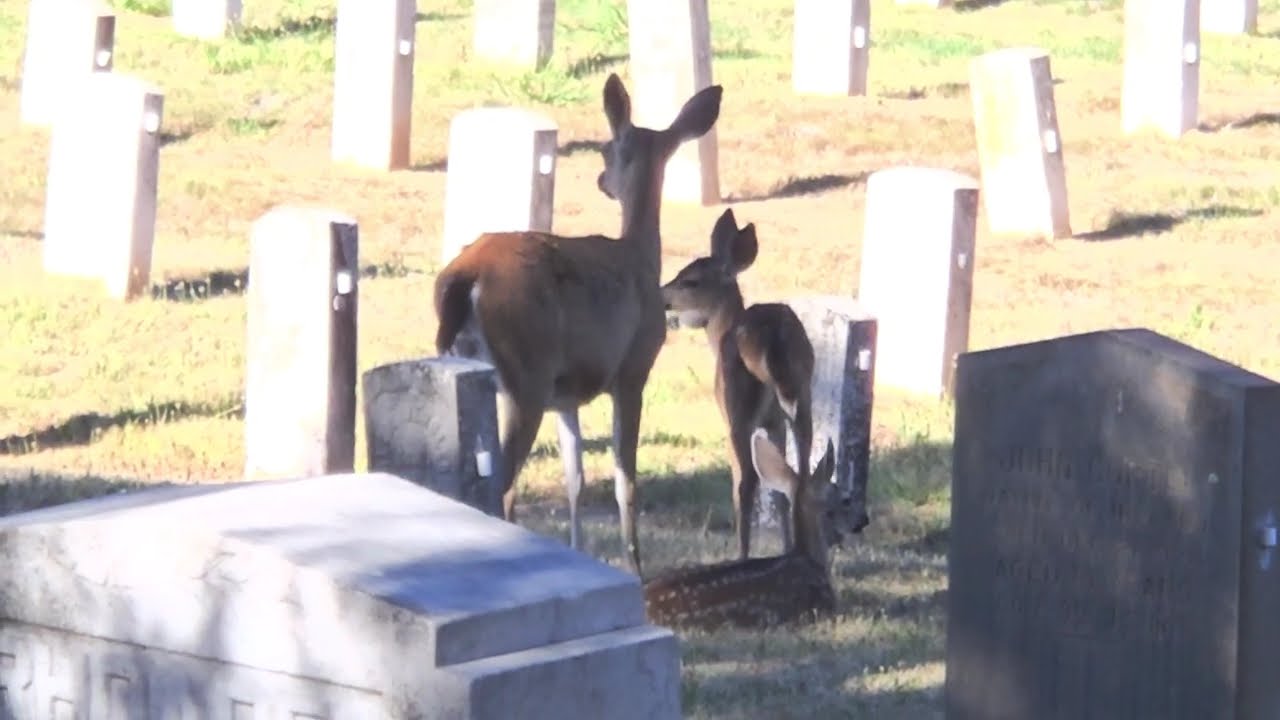
If you visit the Veterans Home Cemetery in the evening before sunset, you may or may not see any deer, but I guarantee you will see turkeys strutting around like they own the place.
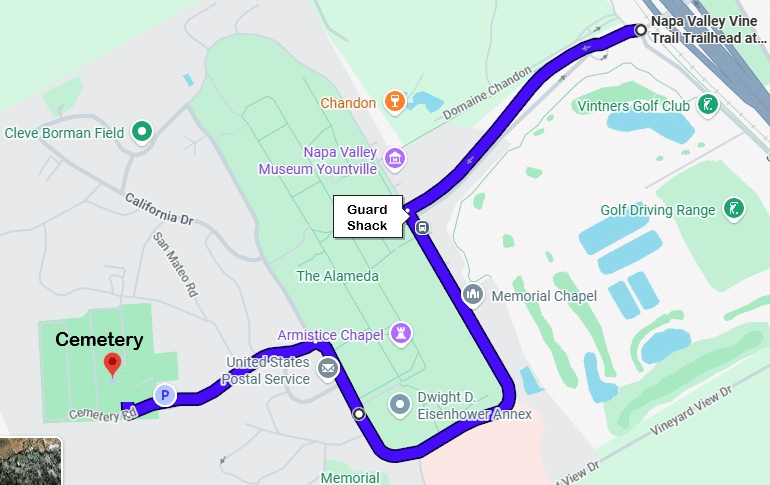
For those of you that have never even been to the cemetery, it’s time! When you get stopped at the security shack, just tell them you are visiting the cemetery and they’ll let you through. When leaving the security shack, turn left and stay on that main road driving in a clockwise pattern until you pass the home post office and spot the cemetery sign directing you up the hill to the left.
At the end of a stressful day, the peaceful and bucolic setting of the cemetery surrounded by nature is hard to beat!
Still not convinced? Please watch this 33-second video:
Ranndy Piña
[email protected]
Sponsored
Author